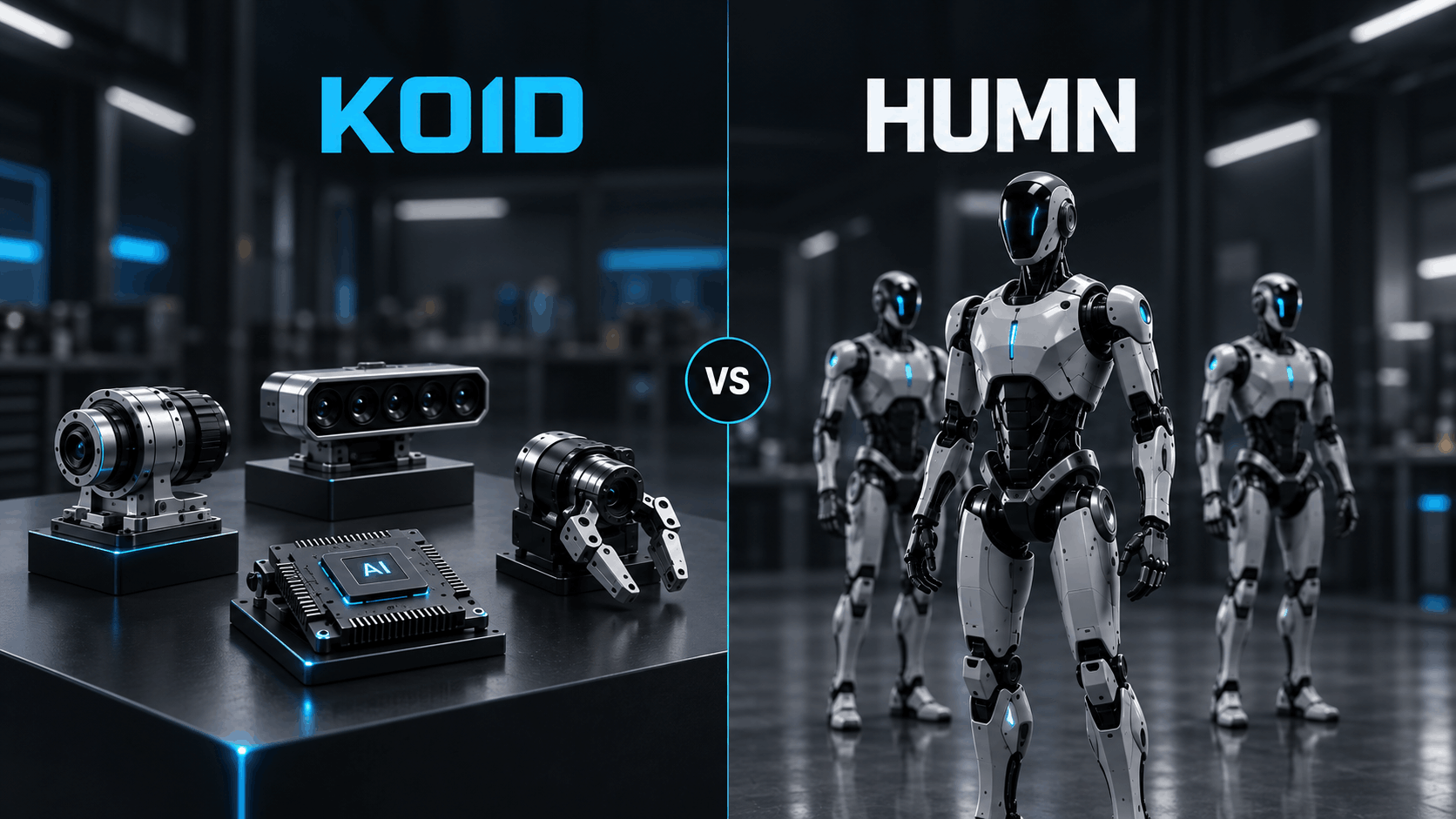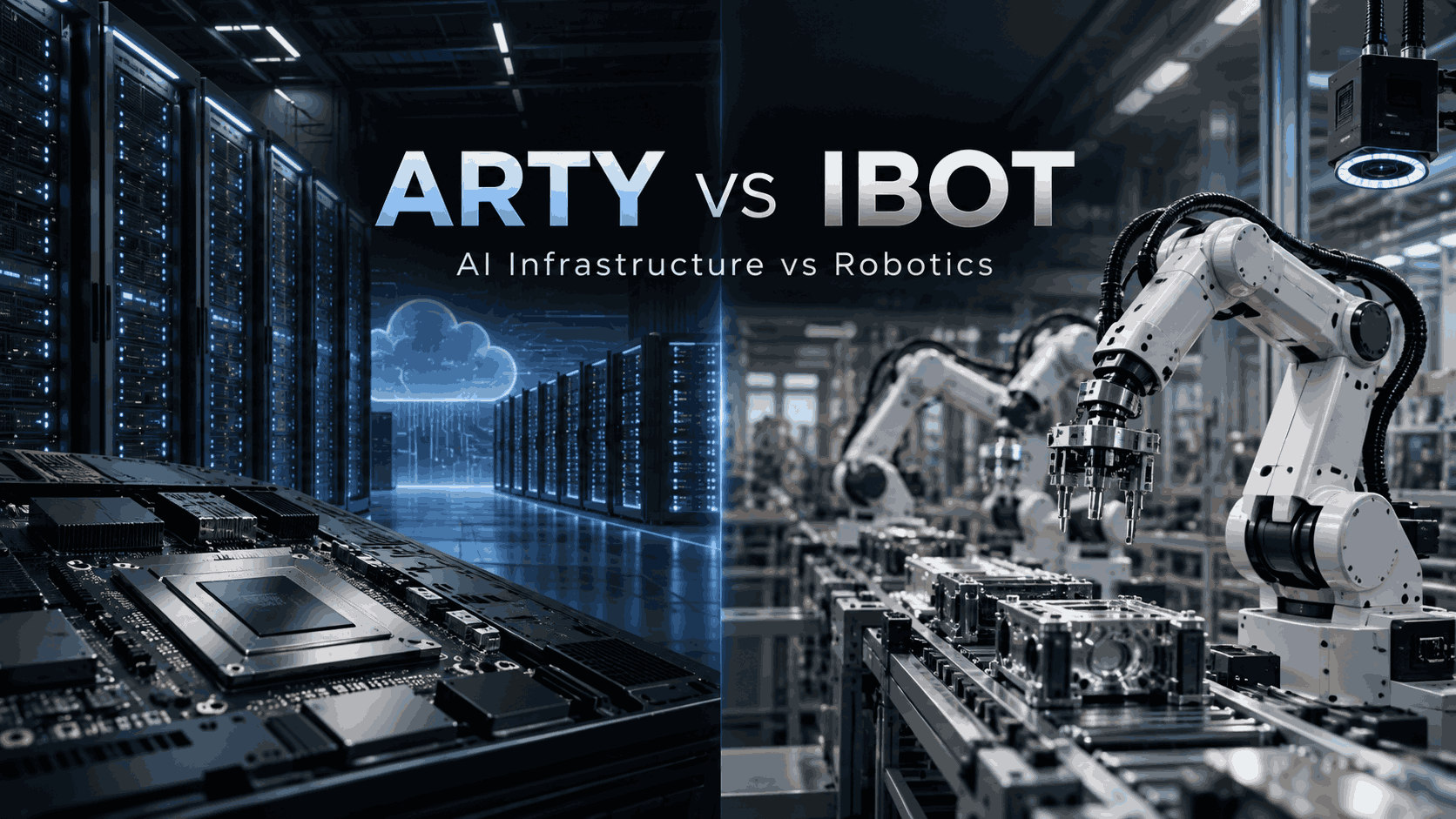
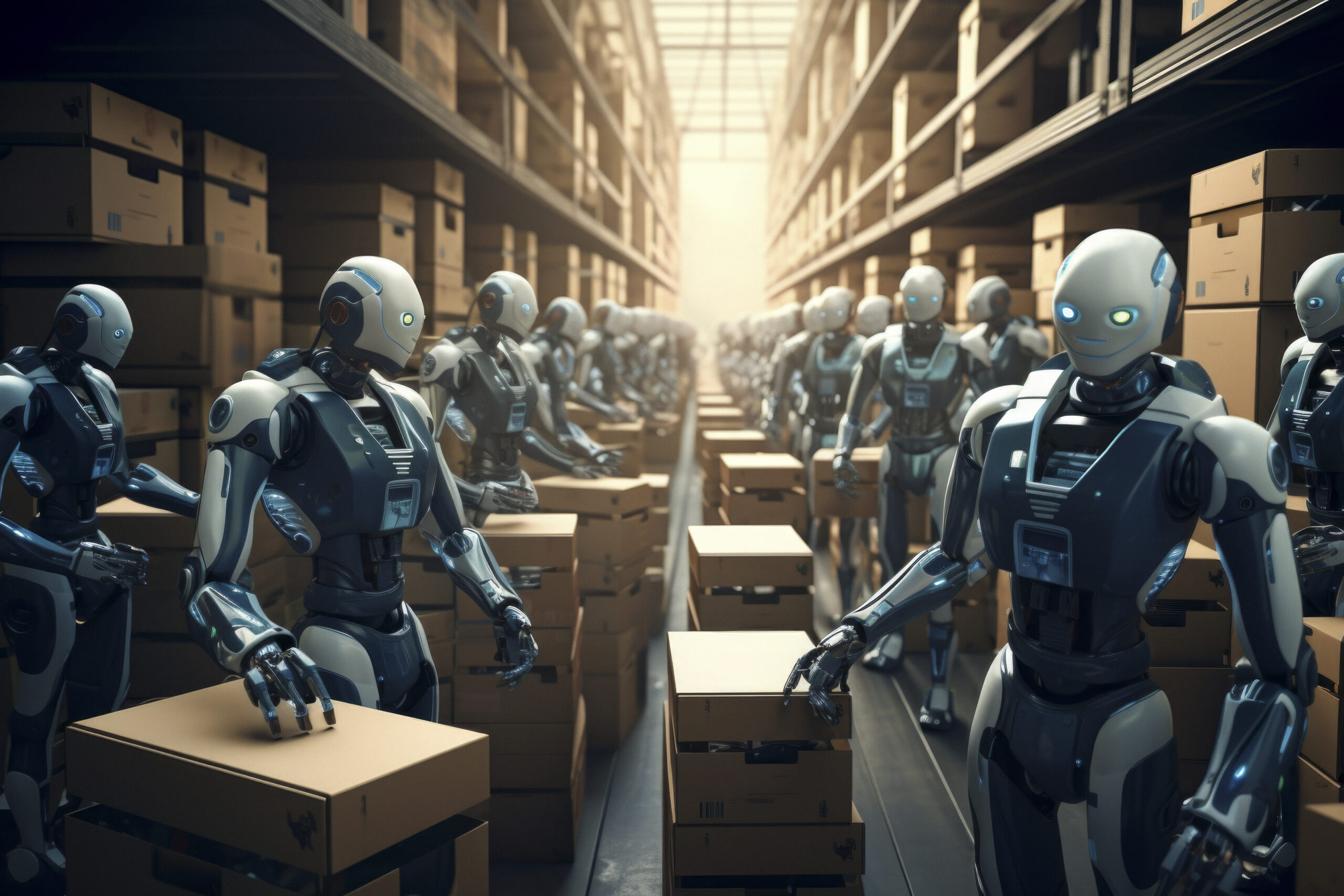
Physical AI is artificial intelligence that perceives, reasons, and acts in the real world through sensors and actuators. The technology moves intelligence off the screen and into robots, vehicles, and factory machines. NVIDIA CEO Jensen Huang popularized the term to mark AI’s shift from digital software to physical machines. A global race is now underway to build it, led by the United States and China. The Robotic Life tracks the companies, robots, and funding driving that race.
Lars Talbert breaks down the digital-to-physical shift in the video below.

What Is Physical AI?
Physical AI is an artificial intelligence system that senses its environment, reasons about it, and takes physical action. Digital AI generates text and images on a screen. Physical AI controls a machine that moves through the real world.
The technology runs on a continuous loop. Sensors gather data through cameras, lidar, and microphones. A model interprets the data and predicts physical outcomes. Actuators then move the machine to complete the task.
Three capabilities define physical AI:
- Perception: Cameras, lidar, and spatial sensors let the machine read its surroundings.
- Reasoning: World models and vision-language-action models predict what happens next.
- Action: Motors and actuators execute the task, from grasping an object to navigating a room.
NVIDIA CEO Jensen Huang popularized the term physical AI to describe this stage of artificial intelligence. The concept extends the same neural networks behind chatbots into machines with a body.
How Physical AI Differs From Digital AI
Physical AI and digital AI share the same core technology but operate in different worlds. Digital AI lives in the cloud and processes data. Physical AI lives in a machine and acts on the physical world. Torc Robotics describes the split as “same brain, different body.”
The table below maps the contrast across key dimensions.
| Dimension | Digital AI | Physical AI |
|---|---|---|
| Environment | Cloud servers and digital interfaces | The three-dimensional physical world |
| Examples | Chatbots, search engines, recommendation systems | Humanoid robots, autonomous vehicles, robotic arms |
| Core skills | Language processing, data analysis, content creation | Spatial navigation, dexterity, object manipulation |
| Training data | Text and images scraped from the internet | Real-world motion, physical forces, hardware feedback |
| Failure mode | Wrong answers, biased output, software bugs | Physical collisions, hardware damage, real-world injury |
| Latency | Tolerates a few seconds of delay | Requires millisecond response to avoid collisions |
Digital AI trained fast because the internet supplied a ready dataset. Physical AI lacks that advantage. No internet archive records how objects behave under force or how a robot moves through a kitchen. Developers create the missing data inside simulation. Tesla’s transition from car software to humanoid software shows this shared foundation in practice, a pivot we cover in Tesla is now a robotics company.
Physical AI Examples Across Industries
Physical AI already operates in robotics, transportation, manufacturing, and healthcare. The technology appears wherever a machine reads a changing environment and acts without a human writing code for each step.
Four sectors lead early adoption:
- Humanoid robots: Machines that sort, lift, and assemble in factories and homes. Tesla Optimus learns tasks by watching human video, a method detailed in how Tesla Optimus learns.
- Autonomous vehicles: Self-driving cars and trucks that read traffic and adjust in real time.
- Industrial manufacturing: Factory systems that spot defects and predict machine failures on the line.
- Healthcare: Surgical robots and hospital aids that assist with precision tasks.
Home robotics is a fast-growing branch of this category. Figure AI pursues a home-first strategy with Figure 03, demonstrated when its humanoid made a bed through visual learning.
The Global Physical AI Race: United States Versus China
The physical AI race is a two-country contest between United States software and Chinese manufacturing scale. American companies lead foundational AI models. Chinese companies lead production volume.
China commands over 90% of global humanoid robot sales. More than 150 Chinese manufacturers ship units, backed by government support and a mature electronics supply chain. Firms like Unitree and Galbot push hardware toward mass production.
The United States relies on advanced AI models and dexterous control. Tesla builds the Optimus humanoid on its Full Self-Driving stack. Boston Dynamics builds the electric Atlas for factory work. Both focus on generalized learning rather than unit volume.
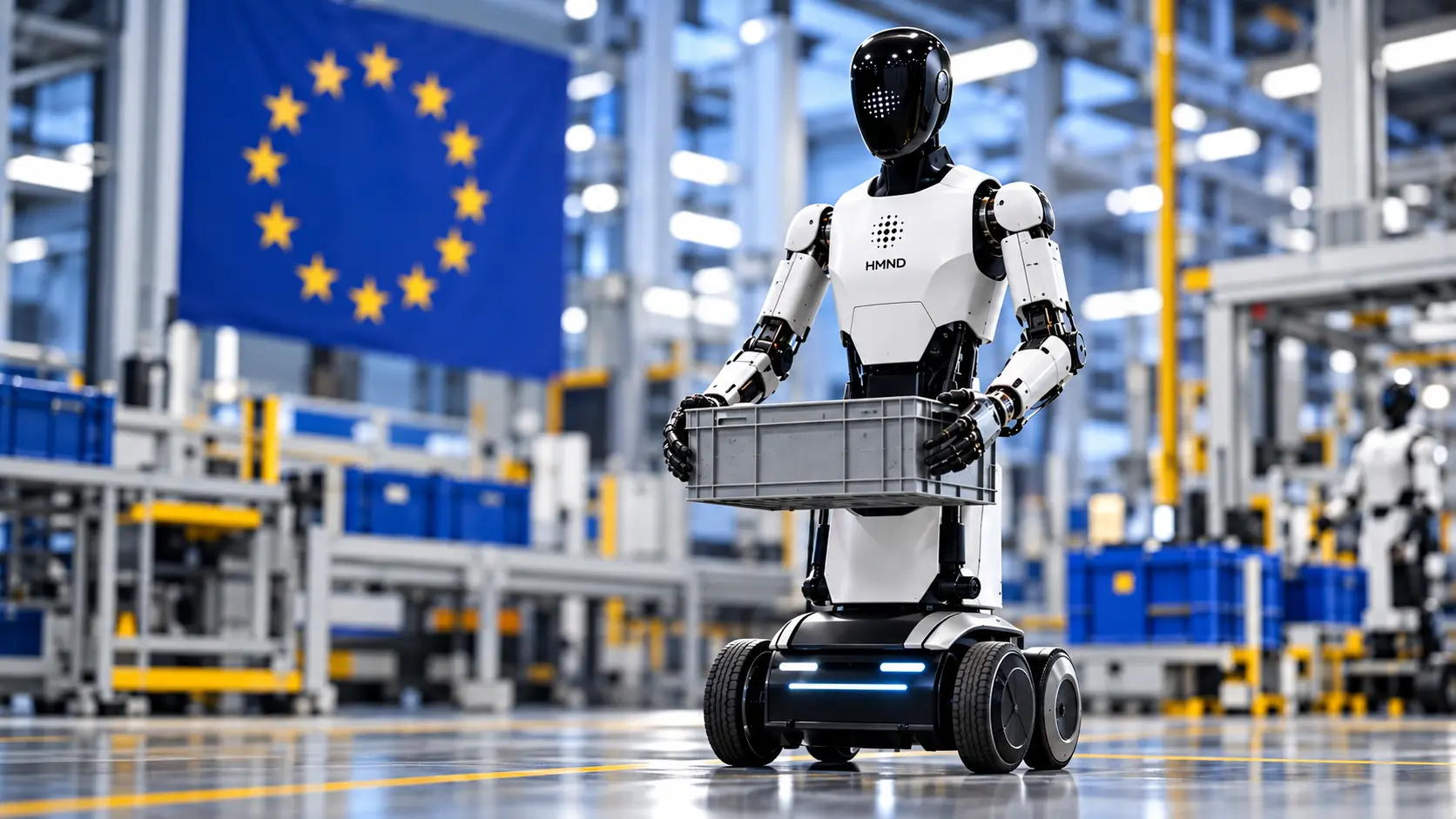
Germany ranks third in the world for robot density, with 449 robots per 10,000 factory workers. The country pairs deep industrial engineering with new humanoid startups. The race extends beyond two nations, and The Robotic Life maps the full field in our autonomous robot companies directory and across all 31 profiles in the humanoid robot directory.
How Big Is the Physical AI Market?
Analysts project the humanoid robot market reaches into the trillions of dollars by 2050. Morgan Stanley estimates nearly 1 billion humanoid units in circulation and a $5 trillion market by 2050. Goldman Sachs estimates factory humanoids reach economic payback in under a year.
Three forces drive the projections. End-to-end AI lets robots train themselves and cuts manual coding. Labor shortages push companies toward machines for dull and dangerous roles. Falling hardware costs make each unit cheaper to produce at scale.
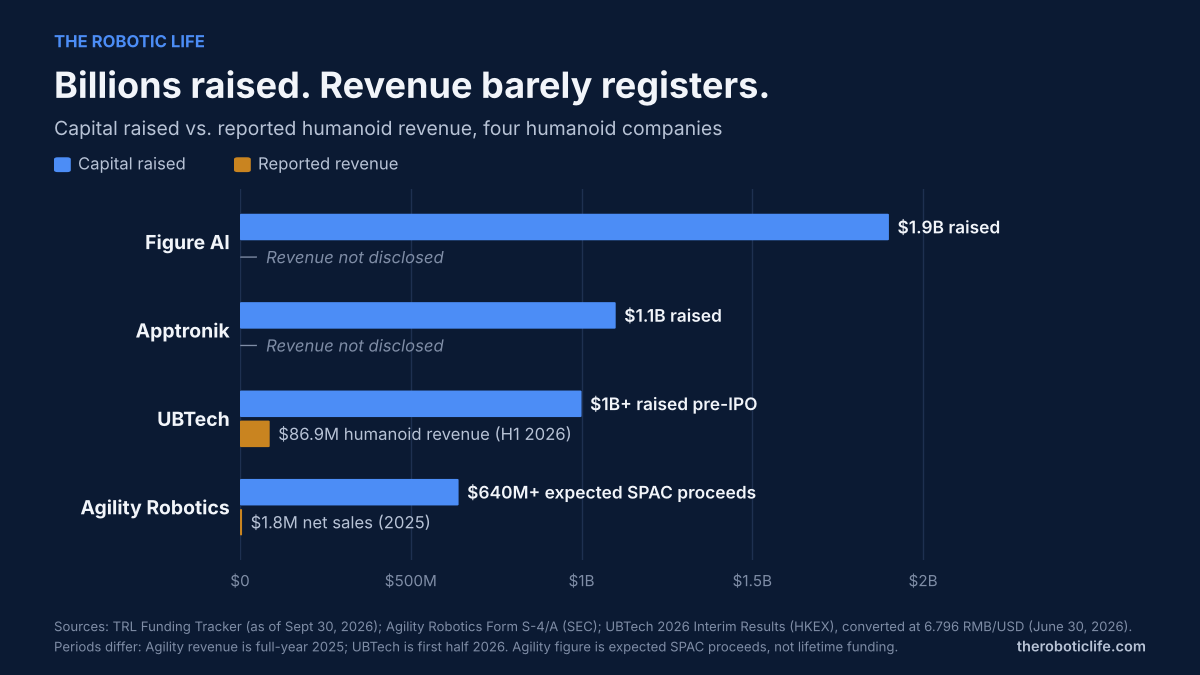
Funding follows the forecasts. Billions of dollars now flow into humanoid startups across the United States and China. The Robotic Life records valuations and funding rounds in the robotics funding tracker.
Is Physical AI Just a Rebrand of Robotics?
Critics argue that physical AI is a marketing rebrand of robotics rather than a new field. The objection appears across investor and robotics forums. Some commenters claim the term inflates chipmaker valuations by promising recurring hardware demand.
The criticism holds partial weight. Robots have existed for decades, and physical AI builds on established robotics. The difference sits in the control method. A traditional robot follows fixed code and fails when conditions change. A physical AI system uses neural networks and world models to adapt to new situations without new code. The label is new. The shift in capability is real.
The honest position is the grounded one. Most humanoids today are not fully autonomous, struggle in uncontrolled spaces, and remain expensive to scale. The funding, the infrastructure, and the industrial demand are real. The buyer-versus-demo gap deserves scrutiny, which we cover in our $20,000 humanoid robot reality check.
Frequently Asked Questions
What is a physical AI example?
A self-driving car is a physical AI example. The vehicle senses the road through cameras and lidar, reasons about hazards, and steers without a human writing code for each situation. Humanoid robots and warehouse machines are further examples.
What is the difference between physical AI and generative AI?
Generative AI creates digital content such as text and images. Physical AI controls a machine that perceives and acts in the real world. Both use neural networks, but only physical AI moves through physical space.
What is the difference between agentic AI and physical AI?
Agentic AI completes digital tasks across software and the internet. Physical AI completes physical tasks through a robot or vehicle. Agentic AI acts on data. Physical AI acts on the world.
Which country leads the physical AI race?
China leads in manufacturing volume, with over 90% of humanoid robot sales. The United States leads in foundational AI models and dexterous control. The two countries lead different parts of the same race.
Key Takeaways
Physical AI moves artificial intelligence from the screen into robots, vehicles, and factories that perceive, reason, and act in the real world. The shift from digital AI to physical AI marks the next stage of the technology, and a global race now decides who builds it.
- Physical AI runs on a sense-reason-act loop through sensors and actuators.
- Digital AI and physical AI share one brain in different bodies.
- China leads humanoid production volume; the United States leads foundational AI.
- Analysts project a multi-trillion-dollar market, though most humanoids remain early-stage.
The Robotic Life tracks the companies, robots, and funding shaping physical AI through a business lens. To follow the race in real time, explore the humanoid robot directory and review the investment angle in our look at the top autonomous robot ETFs for 2026.