The next phase of artificial intelligence does not live on your screen. Autonomous robots now walk onto factory floors, stock warehouses, deliver meals, and assist surgeons. Capital follows the machines. Robotics funding jumped from $23 billion in 2024 to over $40 billion in 2025, and the biggest checks went to autonomous robot companies building general-purpose labor.
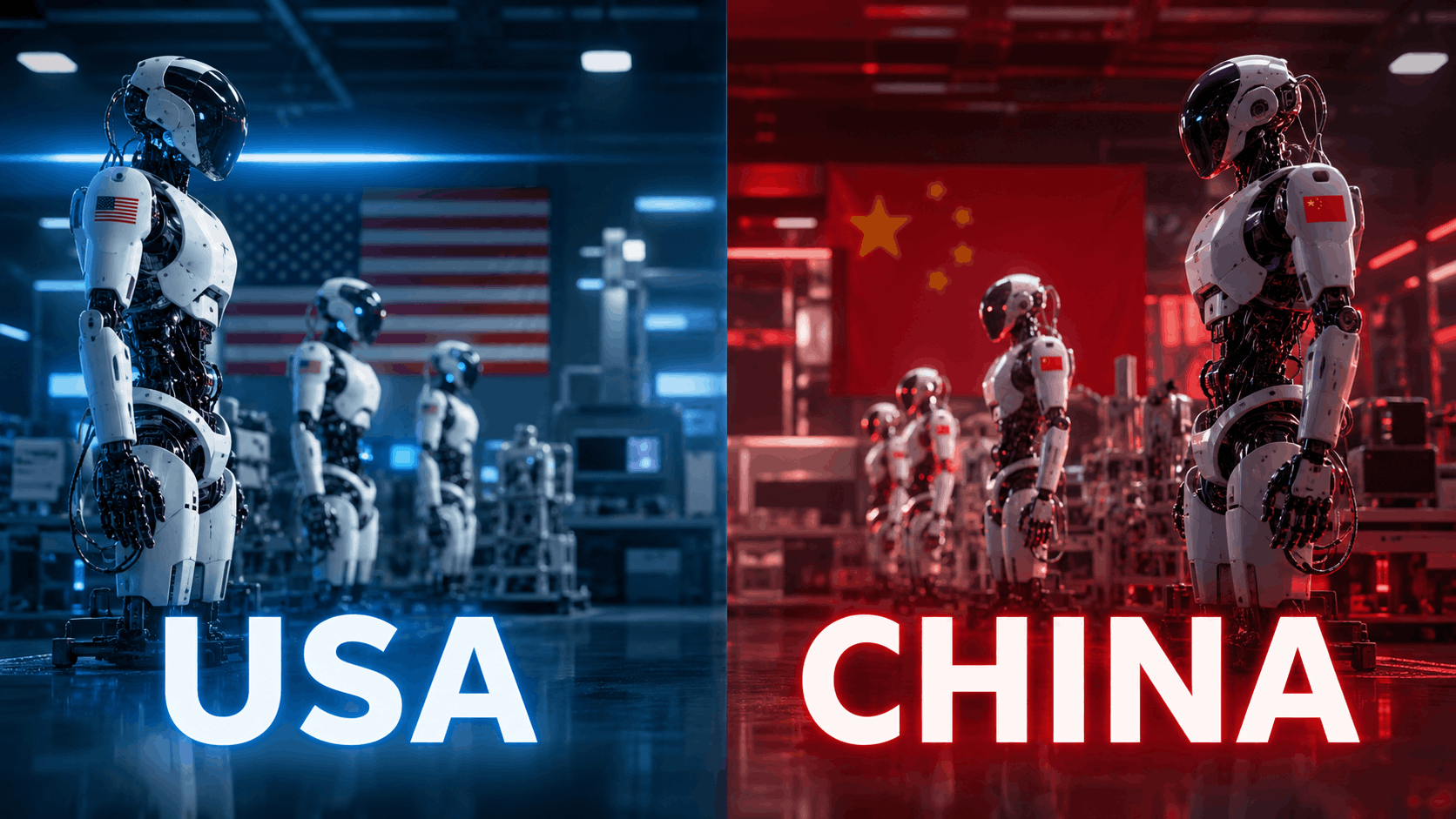
Six categories define the 2026 landscape: humanoid robots, industrial automation, autonomous mobile robots, specialized service robots, physical AI software, and robotics supply chain. The United States leads in foundational AI and humanoid design. China leads in manufacturing volume with over 90% of global humanoid shipments per Visual Capitalist 2025 data. The Robotic Life tracks every major manufacturer in our humanoid robot directory.
Lars Talbert maps the 2025 robotics funding categories in the video below.

What Are Autonomous Robot Companies?
Autonomous robot companies build machines that perceive, decide, and act in the physical world without per-task human programming. The robots combine artificial intelligence, computer vision, sensors, and actuators to operate in unpredictable environments.
Autonomous robots separate from traditional robotics through the AI layer. A traditional factory robot follows fixed code and fails when conditions change. An autonomous robot adapts to new tasks through neural networks and world models.
The shift sits at the heart of the physical AI transition, reshaping the global labor market.
The Six Categories of Autonomous Robot Companies
Autonomous robot companies divide into six categories by capability and target market. The table below maps each category to its primary application and leading firms.
| Category | Primary Application | Leading Companies |
| Humanoid & General-Purpose | Factory, warehouse, household labor | Tesla, Figure AI, 1X, Apptronik, Boston Dynamics, Unitree, AgiBot |
| Industrial & Factory Automation | Welding, assembly, and material handling | FANUC, ABB, KUKA, Yaskawa |
| Autonomous Mobile Robots | Warehouse logistics, fulfillment | Locus Robotics, Symbotic, Geek+, MiR, Amazon Robotics |
| Specialized & Service Robots | Healthcare, food, and delivery | Intuitive Surgical, Serve Robotics, CMR Surgical, Chef Robotics |
| Physical AI Software | Robot intelligence layer | Skild AI, Physical Intelligence, NVIDIA Isaac, Intrinsic |
| Supply Chain & Infrastructure | Actuators, sensors, chips | Harmonic Drive, Keyence, Ambarella, Teradyne |
Data sourced from Forbes, Built In, IMTS, Visual Capitalist, and corporate filings. The full category breakdown follows.
Humanoid Robot Companies: The General-Purpose Labor Race
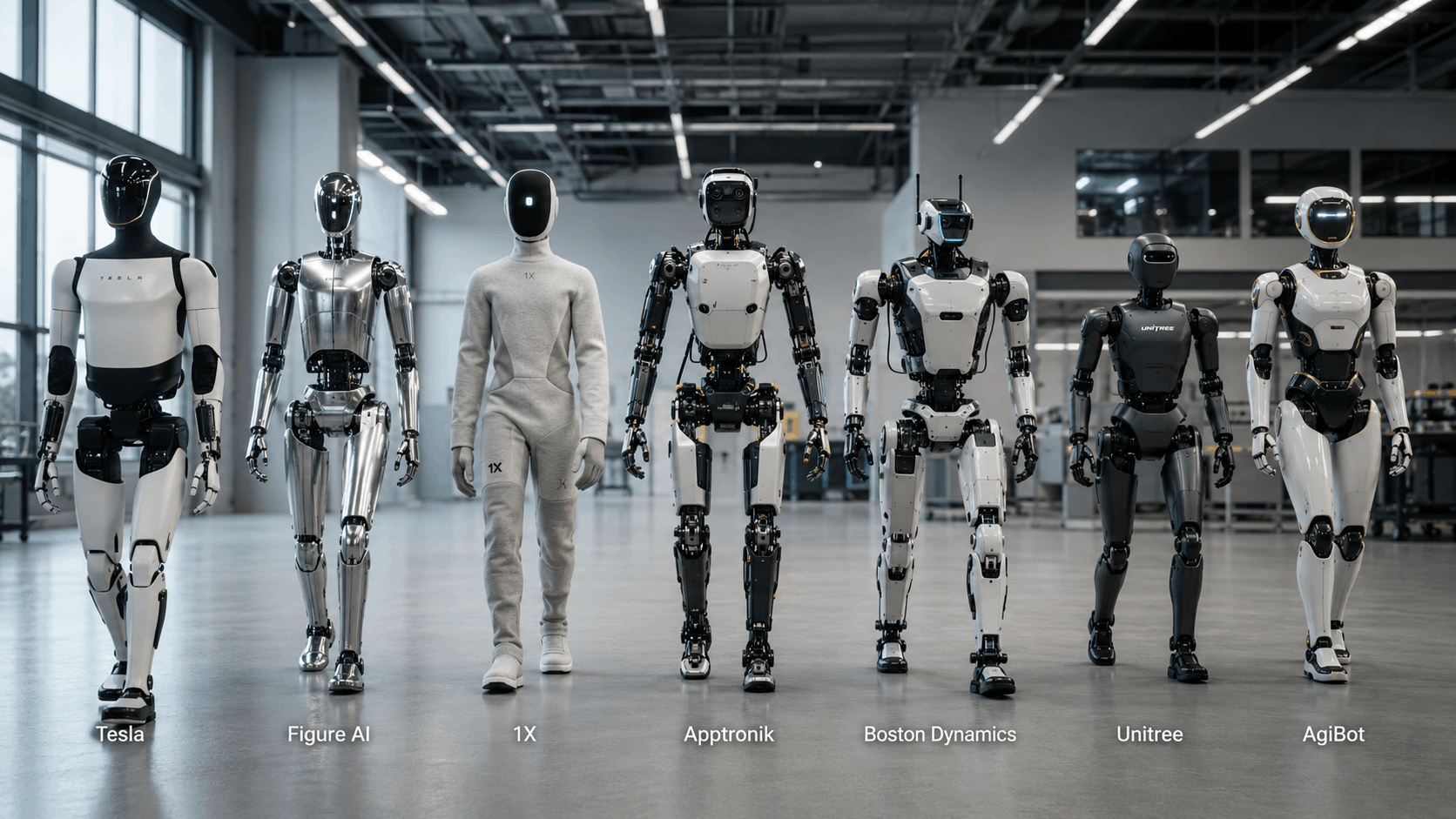
Humanoid robot companies build bipedal machines designed to work in environments already built for humans. The category attracted the largest 2025 funding rounds in robotics, led by Figure AI’s $1 billion round and major raises across Apptronik, 1X, and Skild AI.
The race splits between the United States cognitive-AI leaders and the Chinese volume manufacturers. Forbes estimated Figure AI’s valuation at $39 billion in 2026. Chinese firms shipped nearly 90% of all humanoid units in 2025, per Visual Capitalist.
Tesla (Optimus)
Tesla Optimus runs on the same Full Self-Driving neural network as Tesla vehicles. Over 1,000 units operate across Tesla facilities in Texas and Fremont. The learning method behind the robot sits in our deep dive on how Tesla Optimus learns by watching, and the corporate pivot from cars to robotics is detailed in Tesla is now a robotics company.
Figure AI (Figure 03)
Figure AI develops general-purpose humanoid robots backed by OpenAI, Microsoft, and NVIDIA. Figure 03 targets a home-first deployment strategy. The Figure 03 bed-making demonstration is covered in our Figure 03 made-the-bed analysis.
1X Technologies (NEO)
1X Technologies operates one of the first vertically integrated humanoid factories in the United States. The NEO robot focuses on home assistance and safety around humans. Full specifications sit in our 1X NEO robot profile.
Apptronik (Apollo)
Apptronik builds the Apollo humanoid for industrial and warehouse work. The Austin-based firm raised one of the largest 2025 humanoid rounds and recently announced commercial deployments with JCPenney and Brooks Brothers.
Boston Dynamics (Atlas)
Boston Dynamics, owned by Hyundai, builds the Atlas humanoid and Spot quadruped. The electric Atlas targets industrial workspaces, combining decades of bipedal mechanics with multimodal AI.
Unitree Robotics (G1)
Unitree leads global humanoid shipments with over 5,500 units shipped in 2025. The G1 model combines agility and cost efficiency, and the company dropped unit prices by 72% over two years.
AgiBot, Agility Robotics, UBTECH, NEURA
AgiBot anchors China’s volume position alongside Unitree. Agility Robotics builds the bipedal Digit for warehouse work, with Amazon and Toyota running commercial deployments. UBTECH supplies humanoids to BYD factories in China.
NEURA Robotics leads Germany’s humanoid push from Metzingen.
The full set of humanoid manufacturer profiles sits in our humanoid robot directory.
Industrial and Factory Automation Companies
Industrial robot companies built the established backbone of global manufacturing automation. The category is led by four firms known across the industry as the Big Four.
The Big Four Industrial Robotics Firms
FANUC (Japan), ABB (Switzerland), KUKA (Germany), and Yaskawa (Japan) account for the majority of global industrial robot installations. The four firms dominate welding, assembly, painting, and material handling on factory floors worldwide.
- FANUC ranks as the world’s largest manufacturer of factory automation systems
- ABB Robotics supplies automation hardware and software across manufacturing, automotive, and healthcare
- KUKA builds heavy-duty manufacturing robots and now sits under China’s Midea Group
- Yaskawa runs the MOTOMAN series for welding, assembly, and material handling
Adjacent Industrial Automation Companies
Teradyne owns Universal Robots and Mobile Industrial Robots, supplying collaborative robots and AMRs. Rockwell Automation, Cognex, and Keyence supply the sensors and control systems behind the Big Four.
SoftBank acquired ABB Robotics in 2025 for over $5 billion, marking a major consolidation event across the category.
Autonomous Mobile Robot (AMR) Companies
Autonomous mobile robot companies build wheeled machines that navigate warehouses and factory floors without fixed paths. AMRs separate from older automated guided vehicles through onboard intelligence that maps surroundings in real time.
Locus Robotics, Symbotic, Geek+
Locus Robotics provides scalable fulfillment AMRs deployed across e-commerce warehouses worldwide. Symbotic builds AI-powered end-to-end automation for major retailers, including Walmart. Geek+ leads the global AMR market from China with goods-to-person picking and robotic sorting.
MiR, OTTO Motors, Amazon Robotics
Mobile Industrial Robots (Denmark, Teradyne-owned) supplies collaborative AMRs for indoor logistics. OTTO Motors handles heavy-duty material transport.
Amazon Robotics powers the largest internal AMR fleet in the world across Amazon fulfillment centers, with deployments spanning hundreds of thousands of units.
Specialized and Service Robot Companies
Specialized robot companies build machines targeting one industry’s labor problem rather than general-purpose work. The category includes some of the most profitable autonomous robot businesses in operation today.
Intuitive Surgical (da Vinci System)
Intuitive Surgical leads global surgical robotics. The da Vinci surgical system performs minimally invasive procedures across hospitals worldwide and generates over $7 billion in annual revenue, the highest of any pure-play autonomous robot company.
Serve Robotics
Serve Robotics operates fleets of sidewalk delivery rovers for food and package delivery in urban environments. The publicly traded company expanded operations across major United States markets in 2026.
The Quiet Winners: Chef Robotics, CMR Surgical, Mitra
Chef Robotics automates food assembly in commercial kitchens. CMR Surgical (United Kingdom) builds the Versius surgical robot and raised $200 million in 2025.
Mitra Robotics targets industrial cleaning and inspection and raised $120 million in 2025. Lars Talbert calls the three the quiet winners: companies solving billion-dollar labor problems without the humanoid hype cycle.
Physical AI and Robotics Software Companies
Physical AI companies build the intelligence layer that runs autonomous robots across different hardware bodies. The category attracted the largest 2025 funding rounds outside of humanoid manufacturers.
Skild AI
Skild AI develops foundational, generalist models that operate across humanoids, quadrupeds, and manipulators. The company raised $1.4 billion in 2025, the largest robotics round of the year.
Physical Intelligence
Physical Intelligence builds general-purpose AI for the physical world. The Bay Area firm raised $600 million in 2025 from investors including Jeff Bezos and OpenAI.
NVIDIA (Isaac and GR00T)
NVIDIA supplies the GPUs, simulation environments (Isaac Lab), and humanoid foundation model (GR00T) used across most autonomous robot companies. The platform anchors the infrastructure layer of the physical AI transition.
Intrinsic and Etched
Intrinsic operates as Alphabet’s robotics software platform for industrial automation. Etched builds specialized AI chips for robotics inference and raised $500 million in 2025.
Robotics Supply Chain and Infrastructure Companies
Supply chain companies build the actuators, sensors, and chips that every humanoid manufacturer requires. Investors call these picks-and-shovels plays.
Every humanoid program depends on the same parts. The structural insight: regardless of which humanoid manufacturer ultimately wins, parts suppliers sell to all of them.
- Harmonic Drive Systems supplies precision actuators and harmonic drives, the top holding in the Roundhill HUMN ETF at 4.82%
- Keyence supplies factory automation sensors and scanners
- Ambarella builds edge AI vision processors for autonomous systems
- Teradyne supplies robotic test equipment for semiconductor and humanoid production
- NVIDIA supplies the GPU layer underneath every learning-based robot
Investors targeting the supply chain through funds find exposure in our coverage of the best humanoid robot ETFs in 2026.
Are Humanoid Robot Companies Real Businesses or Speculation?
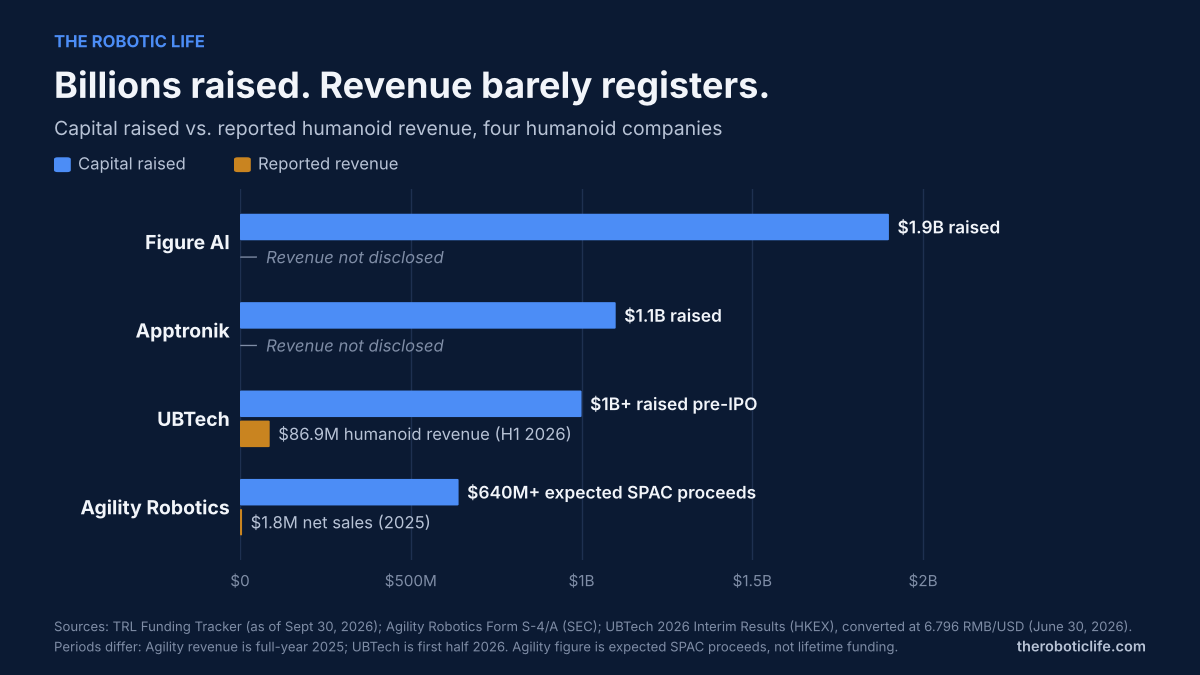
Humanoid robot companies face open skepticism over the form factor’s ability to solve real labor problems. The grounded view separates demo footage from deployed revenue.
The honest critique appears across robotics forums. Industrial six-axis robot arms remain cheaper and more reliable than humanoids for most factory tasks. Many humanoid demo videos are edited or staged. Most humanoid companies have not booked recurring revenue at scale.
Three signals separate real businesses from hype:
- Deployed unit counts: Unitree shipped 5,500 humanoids in 2025; most competitors shipped under 100
- Revenue from commercial contracts: Intuitive Surgical books over $7 billion annually; most humanoid pure-plays report near zero
- Specialist track records: Chef Robotics, CMR Surgical, and Symbotic generate revenue today; humanoid pure-plays target revenue in 3-5 years
The bull case rests on labor shortages and falling hardware costs. Morgan Stanley projects a $5 trillion humanoid market by 2050. Goldman Sachs estimates factory humanoid payback under one year.
The bear case rests on the gap between demo and deployment. Both deserve weight. The buyer-versus-demo gap is covered in our $20,000 humanoid robot reality check.
Frequently Asked Questions
What are the top autonomous robot companies?
Tesla, Figure AI, 1X Technologies, Apptronik, Boston Dynamics, Unitree, AgiBot, Agility Robotics, FANUC, ABB, KUKA, Yaskawa, Symbotic, Locus Robotics, and Intuitive Surgical lead the major autonomous robot categories in 2026.
Who are the Big Four robot companies?
The Big Four refers to the four largest industrial robot manufacturers: FANUC, ABB, KUKA, and Yaskawa. The four firms account for the majority of global industrial robot installations.
What is the biggest robot company in the world?
Intuitive Surgical generates the largest robotics revenue at over $7 billion annually. By humanoid unit shipments, Unitree leads. By total deployed fleet, Amazon Robotics leads warehouse automation.
Which country leads in autonomous robot companies?
The United States leads in foundational AI and humanoid design. China leads in manufacturing volume with over 90% of global humanoid shipments. Germany leads in industrial robot density at 449 robots per 10,000 factory workers.
Key Takeaways
Autonomous robot companies build machines that perceive, decide, and act in the physical world across six distinct categories.
The 2026 landscape spans humanoid pure-plays raising billions, industrial automation giants generating consistent revenue, AMR fleets running warehouses, and specialized robots solving billion-dollar labor problems.
- Humanoid leaders: Tesla, Figure AI, 1X, Apptronik, Boston Dynamics, Unitree, AgiBot
- Industrial Big Four: FANUC, ABB, KUKA, Yaskawa
- AMR leaders: Locus Robotics, Symbotic, Geek+, Amazon Robotics
- Specialist revenue leaders: Intuitive Surgical, Symbotic, Serve Robotics
- Physical AI software: Skild AI, Physical Intelligence, NVIDIA, Intrinsic
- Supply chain plays: Harmonic Drive, Keyence, Ambarella, Teradyne
The Robotic Life tracks every major autonomous robot manufacturer through a business lens. Explore the full humanoid robot directory for individual robot profiles.