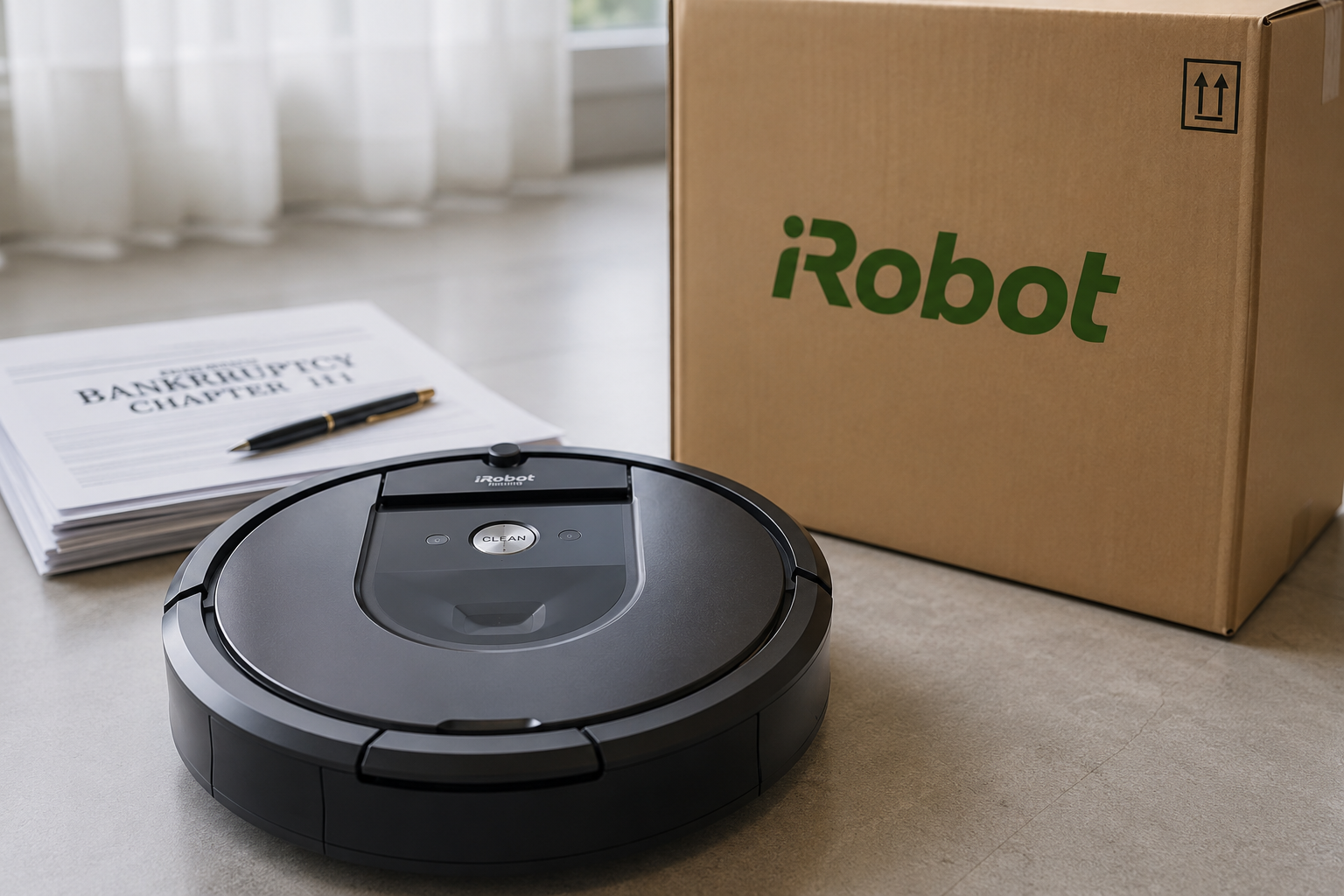
iRobot, the maker of the Roomba, filed for Chapter 11 bankruptcy protection on December 14, 2025, in the U.S. Bankruptcy Court for the District of Delaware. The company emerged on January 23, 2026, as a private subsidiary of Shenzhen Picea Robotics Co., its Chinese contract manufacturer.
The bankruptcy followed the January 2024 collapse of Amazon’s $1.4 billion acquisition, blocked by EU and U.S. regulators on competition and data privacy grounds. A 46 percent U.S. tariff on Vietnamese imports added $23 million in 2025 costs. iRobot held 42 percent of the U.S. robot vacuum market at bankruptcy. Chinese brands led by Roborock and Ecovacs controlled 70 percent of the global market per IDC.
Lars Talbert breaks down the iRobot bankruptcy, the Amazon deal collapse, and the strategic failures that ended an American robotics pioneer in the video below.

iRobot filed for Chapter 11 on December 14, 2025
iRobot filed for Chapter 11 bankruptcy protection on December 14, 2025, in the U.S. Bankruptcy Court for the District of Delaware. The filing was a pre-packaged restructuring with Picea Robotics already named as the buyer.
Total assets and liabilities reached $480.3 million per Manufacturing Dive. CEO Gary Cohen led the company through the filing. Picea received 100 percent of iRobot’s equity. Existing common equity holders were wiped out. Junior creditors and suppliers received full payment.
How iRobot Got Here
iRobot’s 2024 revenue was $681.8 million, a 24 percent decline year over year. Fortune reported the valuation crashed from $3.56 billion in 2021 to approximately $140 million by December 2025, citing London Stock Exchange Group data.
In March 2025, iRobot raised “going concern” doubts in its SEC filing. By June 2025, the credit score dropped to “Very High Risk” per Creditsafe analysis cited by CNBC.
The Amazon Deal Collapse on January 29, 2024
Amazon announced its acquisition of iRobot for $1.7 billion in August 2022, then revised the deal value down to $1.4 billion during 2023.
Reuters reported the deal was terminated on January 29, 2024, after EU antitrust authorities signaled they would block it.
EU antitrust chief Margrethe Vestager stated Amazon could foreclose iRobot rivals on its marketplace. FTC Chair Lina Khan supported the block. Amazon paid iRobot a $94 million termination fee. Co-founder Colin Angle stepped down as CEO. iRobot announced 31 percent workforce layoffs covering approximately 350 jobs.
What the Critics Say
Industry analysts argue the regulatory block contributed to iRobot’s eventual sale to a Chinese owner. The International Center for Law and Economics, the Computer and Communications Industry Association, and Bentley University have published critical positions.
Dirk Auer of ICLE told the Los Angeles Times: “Blocking this deal was a strategic error. The consequence is that we have handed an easy win to Chinese rivals.”
The Picea Acquisition was completed on January 23, 2026
Shenzhen Picea Robotics Co. completed its acquisition of iRobot on January 23, 2026. iRobot emerged from Chapter 11 as a Boston-based private subsidiary of Picea per PR Newswire.
Picea was already owed approximately $100 million pre-bankruptcy, with an unsecured claim of $98.9 million per court filings. Picea then bought $190 million in additional iRobot debt from a prior lender before closing, per Reuters. iRobot delisted from the Nasdaq. The broader context fits within the global race to build autonomous robots at The Robotic Life.
iRobot Safe and the Data Privacy Workaround
iRobot Safe is a new U.S.-based subsidiary established as part of the Picea acquisition. The Robot Report confirmed the structure includes an independent board of U.S. citizens and a U.S.-based Data Security Officer.
The structural irony sits in plain view. Regulators blocked Amazon, citing data privacy concerns. The same home mapping data now sits with a Chinese-owned parent, with iRobot Safe as the workaround.
The Strategic Failure Behind the Bankruptcy
iRobot’s commercial failure was a product velocity event, not a regulatory event. Camera-based navigation lost to LiDAR. Ecovacs and Roborock built Omni stations. The Terra robotic lawnmower never shipped.
iRobot relied on camera-based vSLAM that struggled in low light. Competitors used LiDAR sensors that map a floor in seconds and work in darkness. Ecovacs and Roborock built Omni stations that auto-empty dustbins, wash mop pads, dry with hot air, and refill water. iRobot’s Roomba Combo j9+ requires manual mop pad washing. The full competitor landscape sits at autonomous robot companies tracked at The Robotic Life.
The Vietnam Tariff That Sealed the Outcome
A 46 percent U.S. tariff on imports from Vietnam, imposed in early 2025, added $23 million in costs to iRobot per court filings. The majority of Roomba production sits in Vietnam under Picea’s contract manufacturing.
iRobot had relocated to Vietnam to avoid earlier China tariffs. CNBC reported the trade policy converted operational stress into a solvency event.
The Chinese Smart Vacuum Dominance
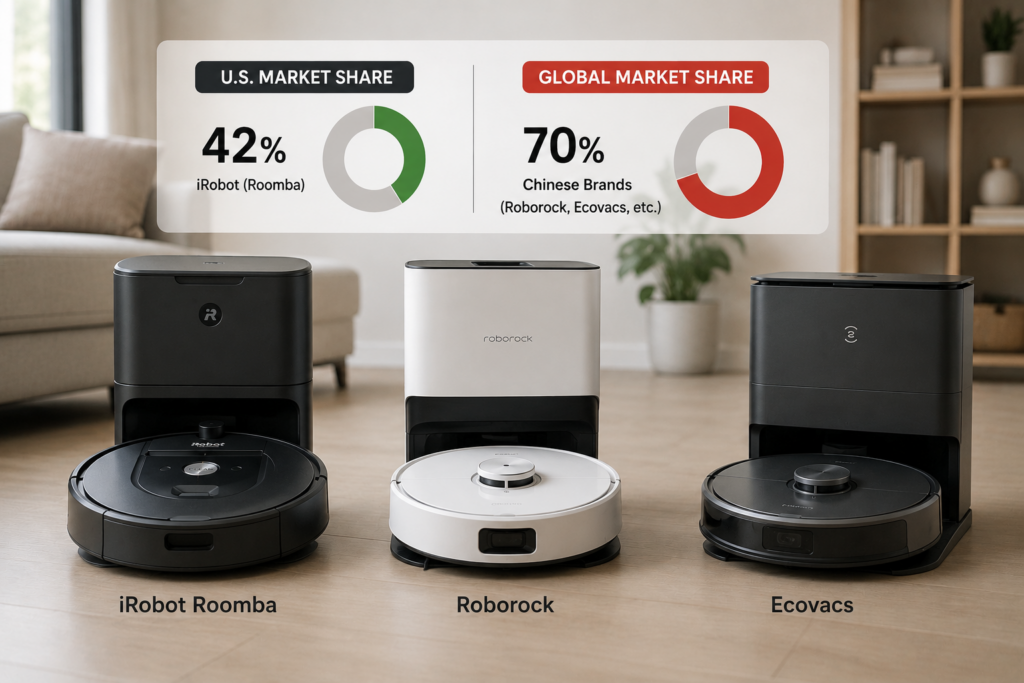
Chinese brands controlled 70 percent of the global smart vacuum robot market by late 2025, per IDC data cited by the Los Angeles Times. Roborock and Ecovacs led the segment.
Amazon CEO Andy Jassy told CNBC in April 2024 that regulators “trust these two large Chinese companies with maps of the inside of U.S. consumers’ homes more than they do Amazon.”
The iRobot Co-Founder Response
Rodney Brooks is the iRobot co-founder and founding director of the MIT Computer Science and Artificial Intelligence Laboratory.
Brooks commented on Silicon Valley’s humanoid investment in late 2025, stating, “a lot of money will have disappeared” over the next 15 years on humanoid robotics, per Fortune.
Colin Angle gave a March 17, 2026, interview to WBUR’s Here & Now on the company’s trajectory. The broader robotics market sits within humanoid robots tracked at The Robotic Life.
What This Means for Roomba Owners
iRobot stated that the Chapter 11 process and Picea acquisition will not disrupt app functionality, customer programs, or product support. Existing Roombas should continue working under Picea ownership.
The Verge reported a worst-case scenario where Picea strips iRobot for parts. Roombas should still operate as standalone devices without app or cloud connectivity in that outcome.
The Verdict on iRobot
iRobot is a real product failure dressed up as a regulatory casualty. The Amazon collapse mattered. The Vietnam tariff mattered. The strategic failure to ship LiDAR, Omni stations, and the Terra lawnmower mattered most.
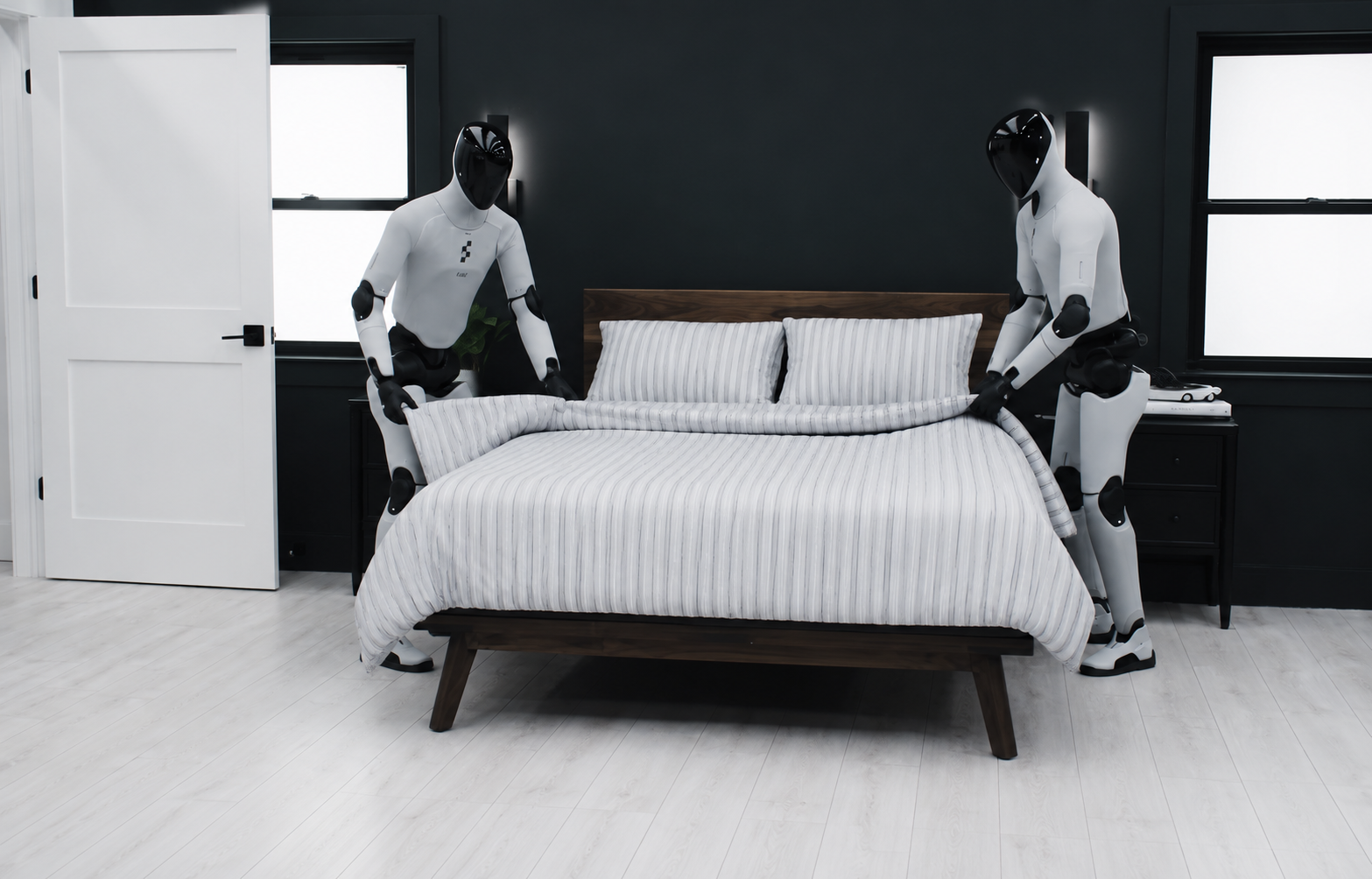
The home robotics category is shifting toward humanoid platforms. The 1X Neo home robot represents the next generation of consumer robotics for the home environment.
Frequently Asked Questions
Did iRobot file for Chapter 11?
iRobot filed for Chapter 11 bankruptcy protection on December 14, 2025, in the U.S. Bankruptcy Court for the District of Delaware. The company emerged on January 23, 2026, as a Picea Robotics subsidiary.
Why did iRobot go bankrupt?
iRobot collapsed under the failed Amazon acquisition, a 46 percent U.S. tariff on Vietnamese imports that added $23 million in 2025 costs, and product velocity failures against Chinese rivals Roborock and Ecovacs.
Will my Roomba still work?
iRobot stated that the bankruptcy will not disrupt app functionality, customer programs, or product support. The Verge reported that Roombas should still operate as standalone devices in a worst-case scenario.
Who bought iRobot?
Shenzhen Picea Robotics Co. acquired iRobot through the pre-packaged Chapter 11 process. The acquisition was completed on January 23, 2026. Picea was iRobot’s Chinese contract manufacturer and primary secured creditor.
Why did the FTC block Amazon iRobot?
The European Union antitrust authority under Margrethe Vestager moved first to block the $1.4 billion deal. The FTC under Lina Khan supported the block. Amazon terminated the deal on January 29, 2024.
Key Takeaways
iRobot is the highest-profile American robotics bankruptcy of 2025-2026. The Picea acquisition transferred American IP and consumer data to Chinese ownership.
- The filing: December 14, 2025, Chapter 11 in Delaware, $480.3 million in assets and liabilities
- The emergence: January 23, 2026, as a Boston-based Picea subsidiary, with iRobot Safe handling U.S. consumer data
- The Amazon collapse: $1.7 billion deal announced in August 2022, revised to $1.4 billion, terminated January 29, 2024
- The tariff shock: 46 percent U.S. tariff on Vietnamese imports added $23 million in 2025 costs
- The strategic gap: camera-based vSLAM versus LiDAR, no Omni station, Terra never shipped, 42 percent U.S. share versus 70 percent Chinese global dominance
This post provides informational coverage of the iRobot bankruptcy. The content is not investment advice.