The next phase of artificial intelligence does not live on your screen. The machines walk onto factory floors, stock warehouses, and assist surgeons. That shift is now a capital allocation decision. Wall Street is already making it.
Robotics and humanoid ETFs give investors exposure to the physical AI economy without picking a single robot company. Seven funds dominate the category in 2026: BOTZ, ROBO, ARKQ, KOID, HUMN, IBOT, and ARTY. Each fund targets a different layer of the humanoid stack, from supply-chain components to AI compute infrastructure. The Robotic Life tracks the underlying companies in our humanoid robot directory.
Lars Talbert breaks down the ETFs powering the humanoid economy in the video below.

How Robotics and Humanoid Robot ETFs Compare
The seven exchange-traded funds in this guide cover the robotics and humanoid robot category in 2026. The table below maps tickers, issuers, expense ratios, assets under management, inception year, and primary focus for each fund.
| Ticker | Fund Name | Issuer | Expense Ratio | AUM | Inception | Primary Focus |
| BOTZ | Global X Robotics & Artificial Intelligence ETF | Global X | 0.68% | $3.34B (Sep 2026) | 2016 | Industrial automation, healthcare robotics |
| ROBO | ROBO Global Robotics & Automation Index ETF | Exchange Traded Concepts | 0.95% | $1.77B (Apr 30, 2026) | 2013 | Broad robotics value chain, equal-weight |
| ARKQ | ARK Autonomous Technology & Robotics ETF | ARK Invest | 0.75% | [Add from ARK’s ARKQ page, with date] | 2014 | Active management, Tesla, autonomous transport |
| KOID | KraneShares Global Humanoid Robotics & Physical AI Index ETF | KraneShares | 0.69% net (0.79% gross) | $334.85M (Sep 17, 2026) | 2025 | Humanoid robotics components and supply chain |
| HUMN | Roundhill Humanoid Robotics ETF | Roundhill | 0.75% | $91.79M (Sep 17, 2026) | 2025 | Humanoid pure-play, embodied AI |
| IBOT | VanEck Robotics ETF | VanEck | 0.47% | $100.63M (Sep 9, 2026) | 2023 | Global robotics semiconductors and automation hardware |
| ARTY | iShares Future AI & Tech ETF | BlackRock iShares | 0.47% | $4.07B (Sep 9, 2026) | 2018 | AI infrastructure, data centers, semiconductors |
Data sourced from each fund’s issuer, with ROBO’s net assets from its April 30, 2026 SEC filing. Expense ratios and assets under management change over time. Verify current figures with each fund issuer.
BOTZ: The Industrial Robotics and AI Layer
Global X Robotics & Artificial Intelligence ETF (BOTZ) holds 81 positions across industrial automation, healthcare robotics, and autonomous vehicles as of September 2026. The fund launched in September 2016 and carries a 0.68% expense ratio.
Top holdings include Keyence (factory automation), ABB (industrial robotics), NVIDIA (AI chips), FANUC (factory automation), and Intuitive Surgical (surgical robotics). Roughly half the portfolio sits outside the United States, with significant Japan exposure.
BOTZ suits investors who want concentrated exposure to established industrial robotics and AI hardware names. Global X reports a 10.46% annualized NAV return since the fund’s 2016 launch, as of June 30, 2026.
Several BOTZ holdings, including FANUC and ABB, appear in our robot companies directory.
Want the numbers side by side? Compare BOTZ vs KOID directly.
ROBO: The Diversified Robotics Value Chain
ROBO Global Robotics & Automation Index ETF (ROBO) holds more than 70 stocks across the full robotics value chain, with no single position above 2.5%. The fund launched in 2013 and carries a 0.95% expense ratio, the highest among the seven.
As of its April 30, 2026 filing, top holdings included AirTAC International (pneumatic components), Koh Young Technology (inspection systems), Teradyne (robotic test equipment), Infineon Technologies (semiconductors), and Hiwin Technologies (motion control). The equal-weight structure spreads risk across smaller and mid-sized companies.
ROBO suits investors who want diversified exposure across the entire robotics supply chain. The 0.95% expense ratio sits above category average. Barchart noted in 2024 that ROBO had underperformed the S&P 500 since its inception. The diversification trade-off cuts both ways.
ARKQ: The Active Bet on Autonomous Technology
ARK Autonomous Technology & Robotics ETF (ARKQ) holds Tesla as a primary position, as does HUMN in this guide. The fund is actively managed by ARK Invest and launched in 2014.
ARKQ targets disruptive innovation across autonomous transportation, 3D printing, energy storage, and space exploration. Tesla sits as the marquee humanoid-adjacent holding, given the company’s Optimus humanoid program runs on the same Full Self-Driving neural network as the cars.
ARKQ suits investors who want direct Tesla exposure inside a robotics wrapper alongside active manager judgment. The 0.75% expense ratio sits in the middle of the category. Active management adds manager risk and historically higher turnover. Tesla’s pivot from automotive to robotics is detailed in Tesla is now a robotics company.
KOID: The Humanoid Robotics and Physical AI Pure-Play
KraneShares Global Humanoid Robotics & Physical AI Index ETF (KOID) is the first United States-listed humanoid robotics ETF. The fund tracks the MerQube Global Humanoid Robotics and Physical AI Index and launched on June 4, 2025.
KOID covers the full humanoid ecosystem: robotics integrators, humanoid manufacturers, and component suppliers including actuator and harmonic-drive makers. Holdings extend across the United States, China, Japan, and South Korea. The fund avoids the single-manufacturer bet by indexing the entire supply chain.
KOID suits investors who want the picks-and-shovels exposure to the humanoid race. The supply chain feeds every humanoid manufacturer covered in our autonomous robot companies guide, regardless of which manufacturer ultimately wins.
See how KOID’s humanoid-focused approach compares: BOTZ vs KOID comparison.
HUMN: The Active Humanoid Pure-Play
Roundhill Humanoid Robotics ETF (HUMN) is an actively managed fund focused on humanoid robotics manufacturers and embodied AI. The fund launched on June 26, 2025 and carries a 0.75% expense ratio.
As of September 17, 2026, top positions include Tesla (5.94%), Harmonic Drive Systems (5.35%), Unitree through a total return swap (4.86%), UBTech Robotics (4.59%), and Rainbow Robotics (4.31%). The fund weights Chinese and Korean humanoid makers alongside Tesla, harmonic gear makers, and Nvidia, giving direct exposure to the global humanoid race.
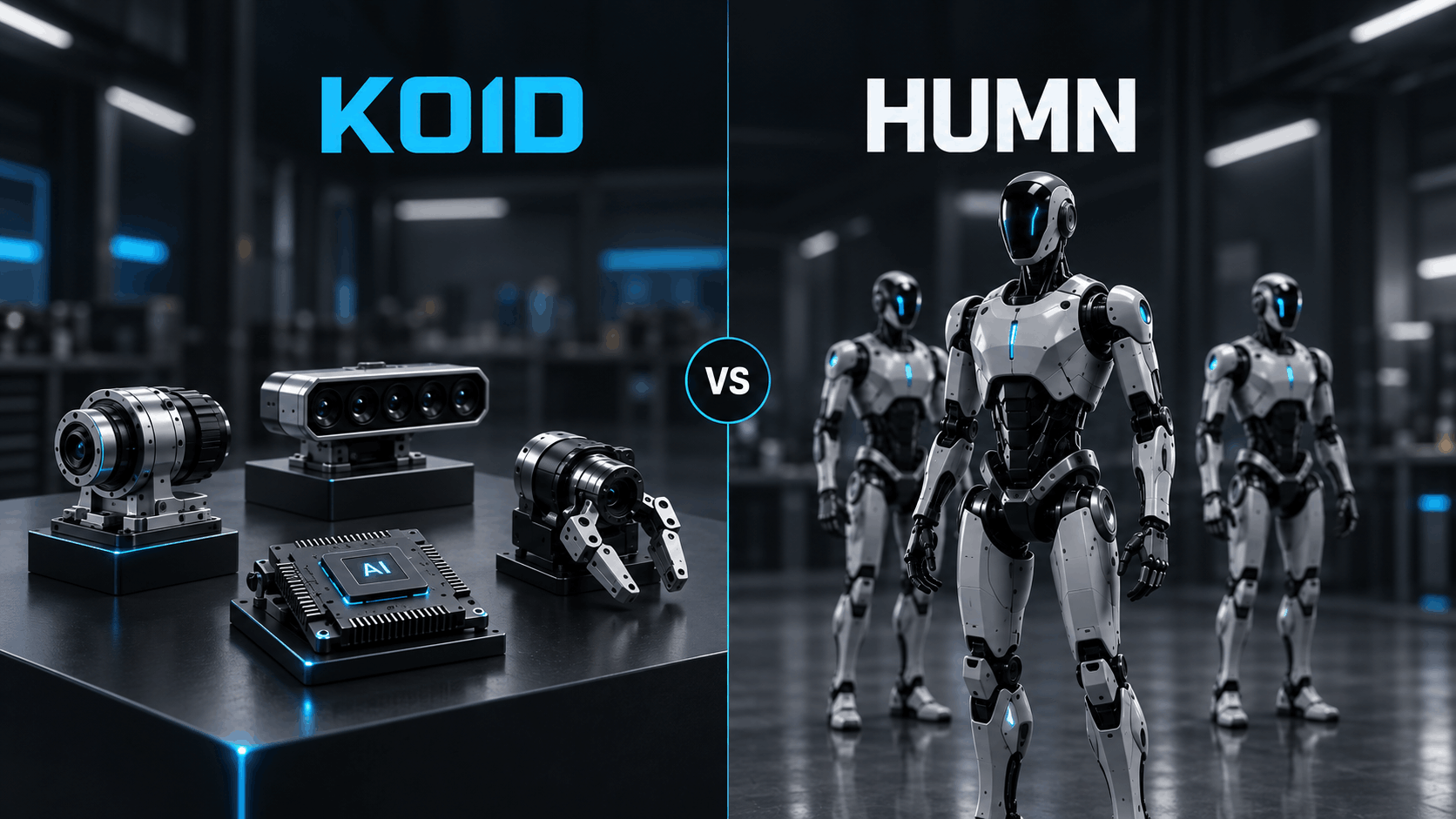
HUMN suits investors who want concentrated humanoid exposure with active manager discretion. Several HUMN holdings appear directly in our humanoid robot profiles, including UBTech, providing readers a way to see the underlying machines inside the fund positions. For HUMN’s full holdings and risk breakdown, see our KOID vs HUMN comparison.
IBOT: The Lowest-Cost Robotics ETF in This Guide
VanEck Robotics ETF (IBOT) carries a 0.47% expense ratio, tied with ARTY for the lowest among the seven funds here. The fund tracks the BlueStar Robotics Index and launched in April 2023.
IBOT covers global semiconductor components, AI hardware, and automated manufacturing systems. Its largest country weights are the United States, Japan, and Switzerland. The portfolio targets the robotics supply chain through semiconductors, sensors, and actuators rather than humanoid manufacturers directly.
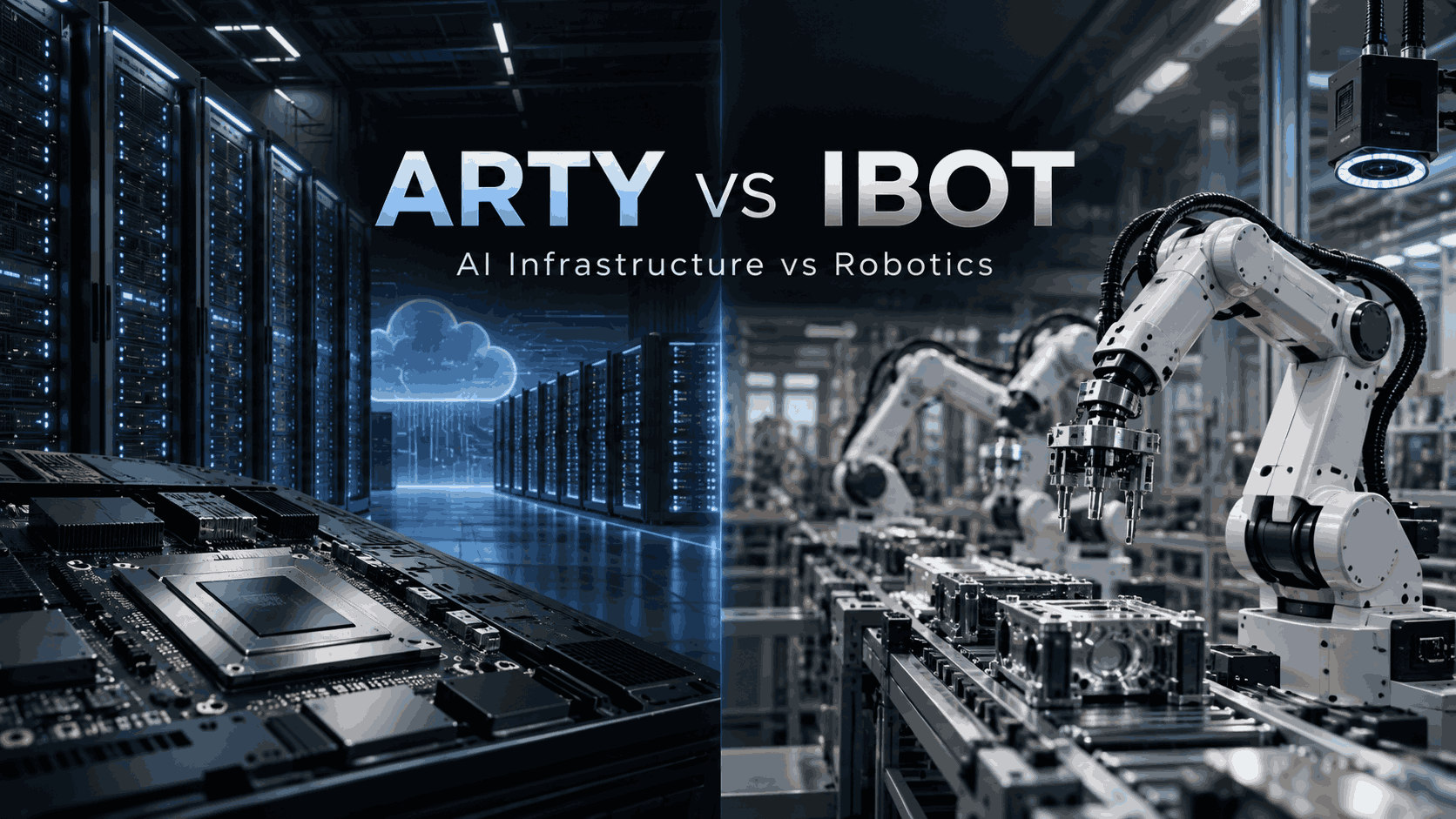
IBOT suits cost-conscious investors who want broad robotics exposure at the lowest fee in this guide. The expense ratio sits 21 to 48 basis points below BOTZ, ROBO, and ARKQ. Considering ARTY too? See our ARTY vs IBOT comparison.
ARTY: The AI Infrastructure Layer
iShares Future AI & Tech ETF (ARTY) holds approximately 50 companies across AI compute, data centers, and AI semiconductors. BlackRock launched the fund in 2018, and ARTY tracks the Morningstar Global Artificial Intelligence Select Index.
Top positions include Taiwan Semiconductor, Marvell Technology, Advanced Micro Devices, CoreWeave, and Micron. ARTY targets the compute layer powering both digital AI and physical AI. Training humanoid robots requires massive computational power, a point covered in our pillar on what is physical AI.
ARTY suits investors who view the humanoid economy through the compute lens rather than the robot lens. The 0.47% expense ratio matches IBOT as the lowest in this guide. Considering IBOT too? See our ARTY vs IBOT comparison.
How to Choose a Robotics or Humanoid Robot ETF
The right robotics ETF depends on the investor’s target: broad robotics exposure, humanoid pure-play exposure, or AI compute exposure.
Four selection factors matter for the seven funds:
- Expense ratio: IBOT and ARTY tie at 0.47%, the lowest of the seven funds here. ROBO sits highest at 0.95%.
- Concentration: BOTZ and ARKQ run concentrated portfolios. ROBO equal-weights more than 70 names for broad diversification.
- Humanoid purity: KOID and HUMN target humanoid robotics directly. BOTZ, ROBO, ARKQ, and IBOT cover broader automation.
- Tesla exposure: ARKQ and HUMN both hold Tesla as a leading position.
For long-run context, BOTZ and ROBO report annualized NAV returns of 10.46% and 10.37% since launch through June 30, 2026, and Barchart noted in 2024 that ROBO had trailed the S&P 500 since inception. Our robotics ETF performance gap analysis tracks how 2026 returns differ across the category. Honest investor accounting includes that record alongside the multi-trillion-dollar humanoid forecasts.
Why Robotics ETFs Matter for the Humanoid Economy
Robotics ETFs provide exposure to the full ecosystem powering humanoid robots, not a single manufacturer. The humanoid economy runs on four layers: AI compute, AI infrastructure, supply-chain components, and humanoid manufacturers.
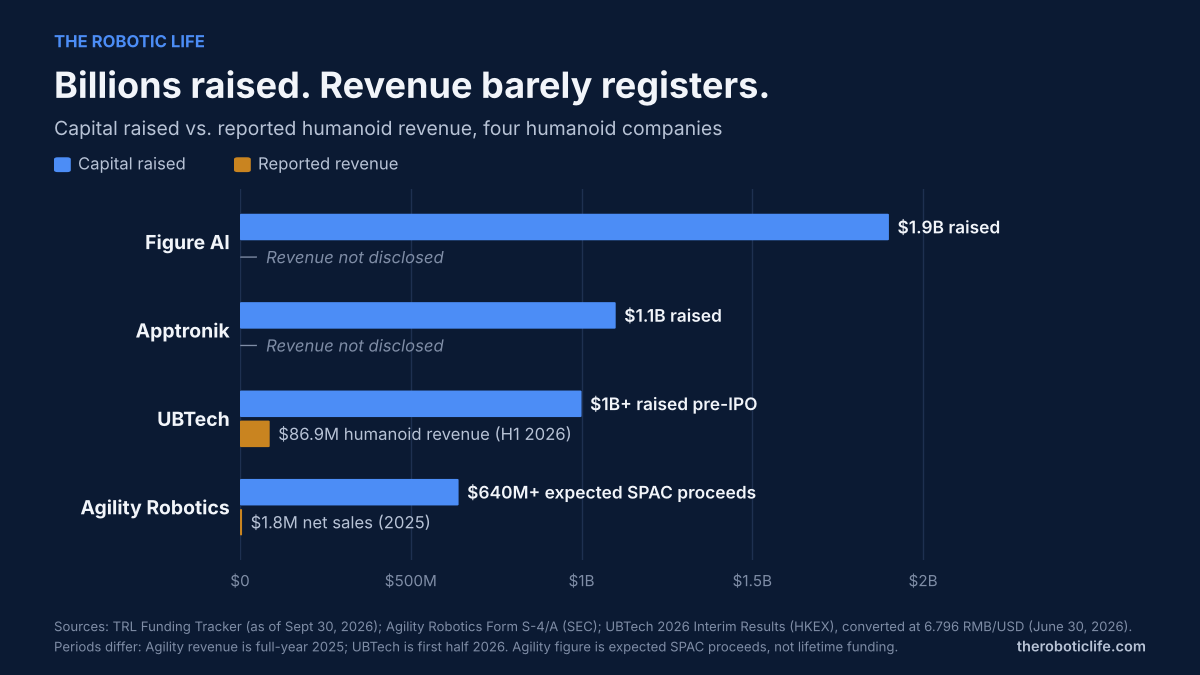
Morgan Stanley projects humanoid robots reach a $5 trillion market by 2050, with nearly 1 billion units in global circulation. Goldman Sachs research has pointed to a payback period of about two years for factory humanoids, provided production costs keep falling. CNBC reported in June 2026 that Barclays projects the humanoid robot market could reach $200 billion by 2035. Funding follows the forecasts, and The Robotic Life records the rounds in our robotics funding tracker.
Frequently Asked Questions
What is the best humanoid robot ETF?
KOID and HUMN are two of the US-listed ETFs focused on humanoid robotics. KOID tracks an index; HUMN is actively managed. Each captures the humanoid category through a different method, and our KOID vs HUMN comparison breaks down the differences.
Are robotics ETFs a good investment?
Robotics ETFs give diversified exposure to a growing industry, but their record is mixed: Barchart noted in 2024 that ROBO, the oldest fund here, had trailed the S&P 500 since its launch. The thesis rests on long-range forecasts such as Morgan Stanley’s projection of a $5 trillion humanoid market by 2050.
What is the difference between BOTZ and ROBO?
BOTZ concentrates capital in industrial robotics and AI giants like NVIDIA and Intuitive Surgical at a 0.68% expense ratio. ROBO equal-weights more than 70 companies across the robotics value chain at a 0.95% expense ratio. BOTZ runs concentrated; ROBO runs diversified.
Does Vanguard offer a robotics ETF?
Vanguard does not currently offer a dedicated robotics or humanoid robotics ETF. Investors seeking robotics exposure use funds from Global X, ROBO Global, KraneShares, Roundhill, VanEck, ARK Invest, and BlackRock iShares.
Which robotics ETF holds Tesla?
ARKQ and HUMN both hold Tesla as a leading position. Tesla was HUMN’s largest holding at 5.94% on September 17, 2026. Most other robotics ETFs hold smaller or no direct Tesla stakes.
Key Takeaways
Robotics and humanoid robot ETFs let investors buy the humanoid economy as a category rather than pick a single manufacturer. The seven funds in this guide each target a different layer of the physical AI stack.
- BOTZ and ROBO cover broad industrial robotics and automation.
- KOID and HUMN target humanoid robotics directly.
- ARKQ holds Tesla and other autonomous-tech disruptors.
- IBOT and ARTY share the lowest expense ratio in this guide at 0.47%.
- ARTY covers AI compute and infrastructure powering physical AI.
The Robotic Life tracks the companies, robots, and funding behind these ETFs through a business lens. Explore the humanoid robot directory to see the underlying robots, review the funding side in our robotics funding tracker, and compare every fund we track in our Robotics ETF Directory.
Disclosure: This article is for informational purposes only and does not constitute investment, legal, or tax advice. Expense ratios, holdings, and prices change. Verify current data with each fund issuer before making investment decisions.
Sources
- Global X, BOTZ fund page: expense ratio, inception, net assets, holdings count, top holdings, and since-inception return
- Exchange Traded Concepts, ROBO fund page: inception and since-inception return
- GuruFocus, ROBO SEC filing summary: net assets and top holdings as of April 30, 2026
- ARK Invest, ARKQ fund page: expense ratio, inception, net assets, and holdings
- KraneShares, KOID fund page: index, expense ratio, net assets, and holdings
- KraneShares, KOID fact sheet: inception date
- Roundhill Investments, HUMN fund page: expense ratio, net assets, inception, and top positions
- VanEck, IBOT fund page: expense ratio, inception, index, net assets, and country weights
- iShares, ARTY fund page: expense ratio, index, net assets, and holdings
- Barchart, 3 ETFs to Invest in Robotics Stocks: ROBO’s performance against the S&P 500 since inception
- Morgan Stanley, humanoid robot market outlook: the $5 trillion market and about 1 billion humanoids by 2050
- Goldman Sachs, Humanoid Robots: Sooner Than You Might Think: the two-year payback period
- Barclays, AI Gets Physical report, reported by CNBC in June 2026, via Nasdaq’s summary: the $200 billion by 2035 projection