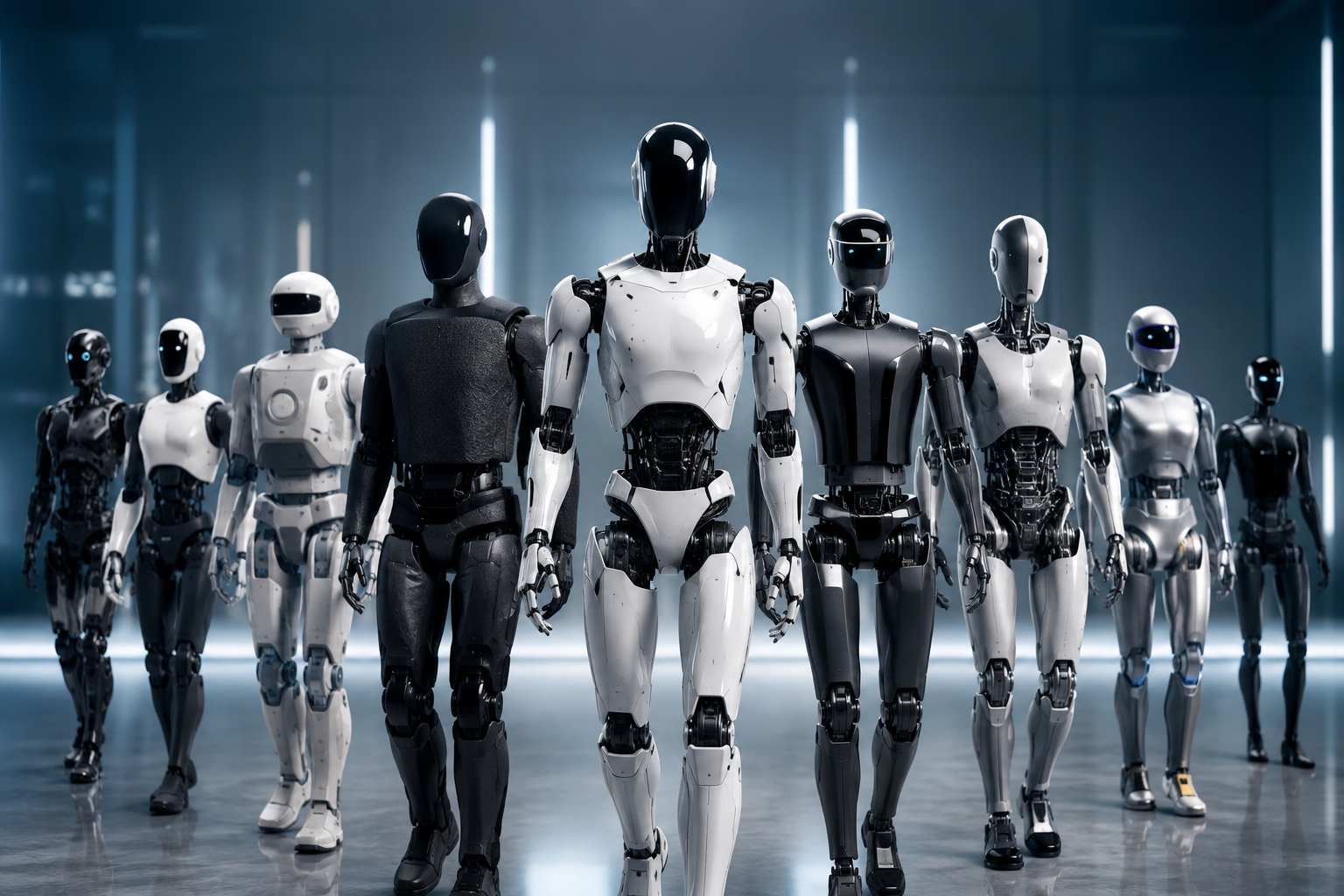
The humanoid robotics race is no longer a research-lab discussion. Billions of dollars flowed into the category through 2025 and 2026. Ten startups now separate themselves from the pack on commercial deployment, verified funding, and manufacturing scale. Figure AI reached $39 billion in valuation.
Unitree shipped humanoids at $16,000 starting prices. Agility Robotics announced a SPAC merger targeting a $2.5 billion public listing. Apptronik closed $935 million in cumulative funding. The Robotic Life tracks 31 humanoid robotics companies through the funding tracker and humanoid directory.
This ranked list identifies the top 10 humanoid robot startups in 2026 and compares the funding, valuations, manufacturing scale, and commercial progress separating them from the field.

Top 10 Humanoid Robot Startups 2026 Comparison Table
The table below ranks the ten humanoid robot startups by commercial deployment, verified funding, and 2026 status at a glance.
| Rank | Company | HQ | Key Robot | Funding | Price / Status |
| 1 | Figure AI | San Jose, CA | Figure 03 | $1.9B+ ($39B valuation) | BMW deployment, BotQ 12K units/year |
| 2 | Unitree Robotics | Hangzhou, China | G1 | HongShan / Matrix / Shunwei | $16,000 starting, mass production |
| 3 | Neura Robotics | Metzingen, Germany | 4NE-1 | European industrial-focused | €98,000 industrial pricing |
| 4 | Agility Robotics | Corvallis, OR | Digit | ~$438M ($1.2B valuation) | 9 customer sites, SPAC pending AGLT |
| 5 | Apptronik | Austin, TX | Apollo | ~$935M ($5B valuation) | Mercedes-Benz + GXO pilots |
| 6 | 1X Technologies | Palo Alto, CA | NEO | $125M+ (OpenAI-backed) | $20K / $499/mo, 2026 deliveries |
| 7 | Fourier Intelligence | Shanghai, China | GR-3 | Rehab-robotics revenue base | Companion + healthcare focus |
| 8 | Sanctuary AI | Vancouver, Canada | Phoenix | ~$140M (Magna equity) | Hydraulic hand differentiation |
| 9 | UBTECH Robotics | Shenzhen, China | Walker S2 | $940M+ private, IPO Dec 2023 | Publicly traded (HKEX) |
| 10 | PAL Robotics | Barcelona, Spain | TIAGo Pro | Bootstrapped / grants | 35+ countries, 22 years |
Rankings anchor to commercial deployment status, verified funding, technology maturity, and manufacturing scale.
Ranking Methodology: Four Attributes That Separate Startups From Hype
This ranking evaluates humanoid robotics startups on four verifiable attributes rather than valuation or media coverage alone.
The four attributes are commercial deployment status, verified funding, technology maturity, and manufacturing scale. Commercial deployment status covers paying customers running real workloads. Verified funding is anchored to public disclosures or credible reporting. Technology maturity means hardware shipping versus prototype demonstrations.
Manufacturing scale is annual production capacity or unit output. Each company is anchored to numeric values where public disclosures allow.
Tesla Optimus is excluded from the ranking as an honorable mention. Tesla is a public company, not a startup. The Optimus program remains one of the most consequential humanoid robotics efforts in the category. For investors seeking direct public-market exposure to Tesla alongside pure-play automation leaders, compare fund weightings and top holdings in our Robotics Investing & ETF Guide.
1. Figure AI: The Momentum Leader
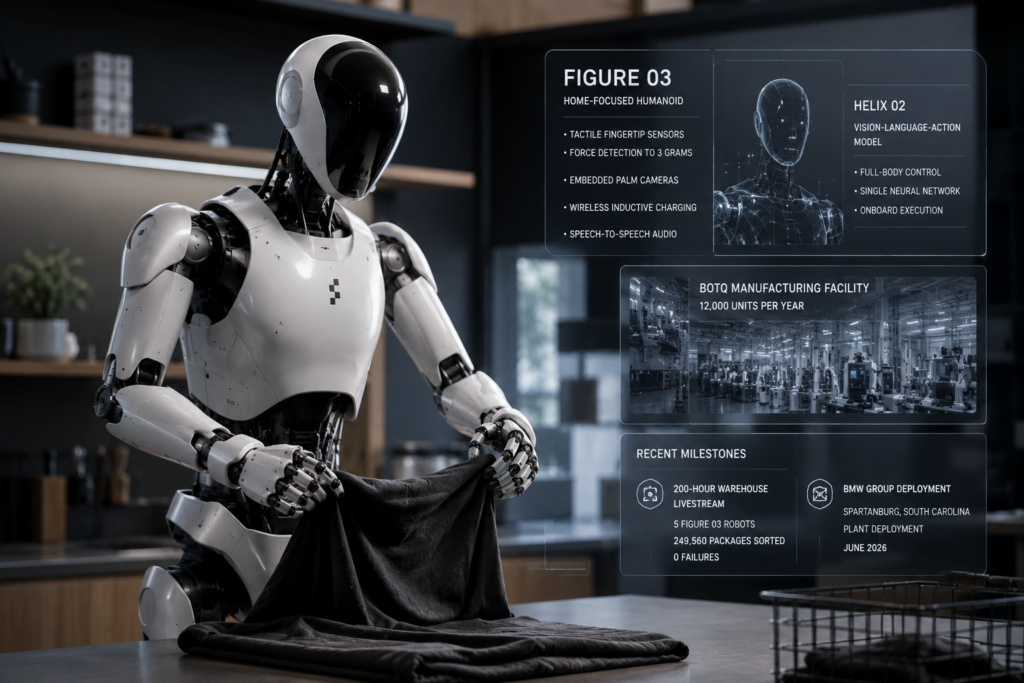
Figure AI is a San Jose-based humanoid robotics company founded in 2022 that reached $39 billion in private valuation and shipped the Figure 03 home-focused humanoid platform.
Figure raised more than $1.9 billion cumulative including a $1 billion round in September 2025 at the $39 billion valuation per Robozaps coverage. Investors include Jeff Bezos, Microsoft, NVIDIA, Intel, Qualcomm, T-Mobile, Salesforce, and Brookfield.
Figure 03 (announced October 9, 2025) is designed for home environments with tactile fingertip sensors detecting forces as light as 3 grams, embedded palm cameras, soft textile exterior, wireless inductive charging, and speech-to-speech audio.
The Helix 02 vision-language-action model (announced January 27, 2026) controls the robot’s full body through a single neural network with onboard execution.
Figure’s BotQ manufacturing facility targets 12,000 units per year. The company completed a 200-hour warehouse livestream in May 2026 with five Figure 03 robots sorting 249,560 packages with zero reported failures. BMW Group announced Figure 03 deployment at the Spartanburg, South Carolina plant in June 2026.
The Robotic Life covers Figure 03 in the Figure 03 by Figure AI robot profile.
Pros
- $39B valuation with $1.9B+ funding backing
- Verified BMW commercial deployment
- Proprietary Helix 02 VLA model with onboard execution
- BotQ dedicated manufacturing facility
Cons
- Home consumer availability targeted late 2026 at earliest
- Bedroom demo environment optimized for machine vision per community analysis
- Highest valuation in the category creates execution pressure
2. Unitree Robotics: The Price Disruption
Unitree Robotics is a Hangzhou, China-based humanoid robotics company founded in 2016 that democratized humanoid robot access through the $16,000 G1 platform.
Unitree’s G1 humanoid starts at $16,000 per Robozaps, making it the most affordable full-size humanoid robot commercially available. The H1 humanoid set the world speed record for humanoid running at 3.3 meters per second (7.4 miles per hour). Sixteen H1 units performed on China’s Spring Festival TV in a cultural milestone for the category.
Unitree is mass-producing humanoids today, with G1 and quadruped Go2 (from $1,600) shipping globally. Investors include HongShan (Sequoia China), Matrix Partners, and Shunwei Capital. The company is exploring a Hong Kong IPO.
Unitree does for humanoids what DJI did for consumer drones: makes advanced robotics affordable enough to scale. The Robotic Life covers the G1 in the G1 by Unitree Robotics robot profile.
Pros
- $16,000 G1 starting price disrupts category economics
- Mass production shipping today
- H1 world speed record demonstrates hardware capability
- Chinese supply chain advantage for scaling
Cons
- US government security scrutiny increasing on Chinese robotics
- Long-term reliability under commercial workloads unproven
- Consumer-adjacent price does not mean consumer-ready product
3. Neura Robotics: The European Cognitive Robotics Leader
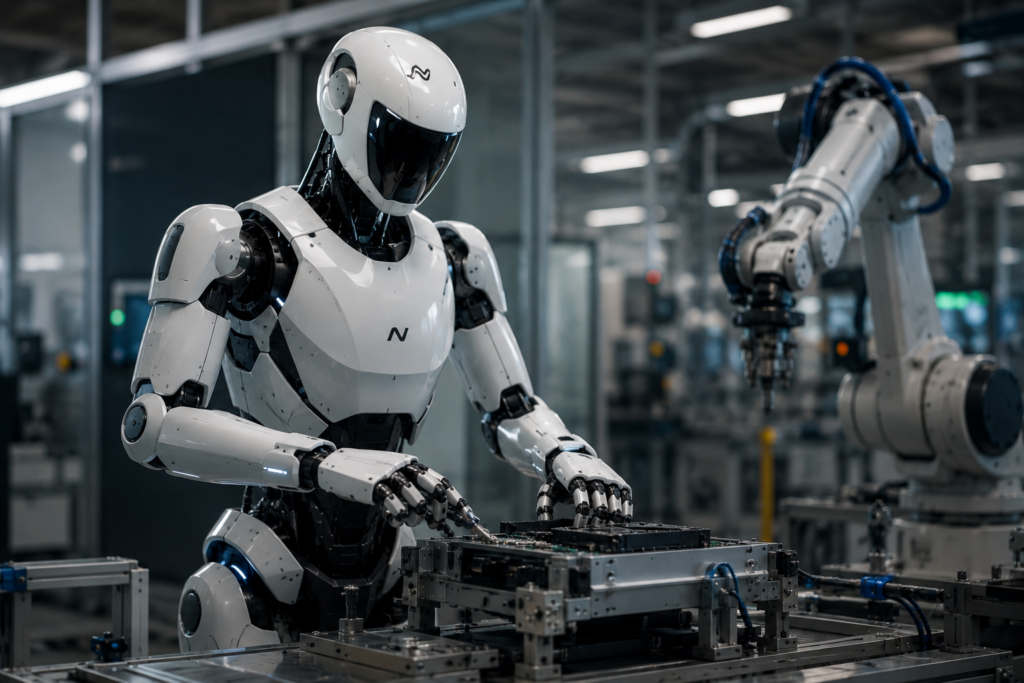
Neura Robotics is a Metzingen, Germany-based humanoid robotics company positioning around cognitive robotics with the 4NE-1 humanoid platform. Neura’s 4NE-1 humanoid stands 1.8 meters, weighs 80 kilograms, and carries a 100-kilogram payload capacity per HRT specifications.
The 4NE-1 is priced at approximately €98,000 for industrial applications per Robozaps. The company focuses on collaborative robotics for European high-end industrial sectors where reliability, safety certification, and human-collaboration engineering are baseline requirements.
Neura’s cognitive robotics positioning centers machines that understand and adapt to human environments rather than executing pre-programmed sequences. The company represents Europe’s clearest humanoid robotics leadership position in a category otherwise dominated by American and Chinese entrants. The Robotic Life covers 4NE-1 in the 4NE-1 by NEURA Robotics robot profile.
Pros
- Europe’s clearest humanoid robotics leadership position
- 100-kilogram payload capacity for industrial workloads
- Cognitive robotics focus on human-collaboration engineering
- Established safety certification pathway for European markets
Cons
- Lower media coverage than Silicon Valley or Chinese competitors
- €98,000 pricing limits accessibility outside industrial buyers
- Slower manufacturing ramp than Chinese mass-production rivals
4. Agility Robotics: The First Commercial Deployment
Agility Robotics is a Corvallis, Oregon-based humanoid robotics company founded in 2015 with Digit as the first commercially deployed humanoid robot per the company’s stated positioning.
Agility raised approximately $438 million cumulative per Robozaps including a $150 million Series C in October 2024 at a $1.2 billion post-money valuation (DCVC-led). The company announced a SPAC merger with Churchill Capital Corp XI in 2026, targeting a $2.5 billion valuation and more than $620 million in gross proceeds. Digit is deployed at nine commercial customer sites including GXO Logistics, Schaeffler, Toyota Motor Manufacturing Canada, and Mercado Libre.
Amazon has run extended pilot programs. Agility reports more than 65,000 hours of real-world robot operation and more than 100,000 totes moved in live production environments. The company has announced a backlog exceeding $300 million for the next-generation Digit. The Robotic Life covers Digit in the Digit by Agility robot profile.
Pros
- First commercially deployed humanoid per stated positioning
- 65,000+ operating hours across 9 customer sites
- SPAC pending public listing (AGLT ticker)
- $300M+ next-generation Digit backlog
Cons
- Revenue and unit economics not publicly disclosed at SPAC filing
- SPAC listings historically underperform initial valuations
- Warehouse-focused specialization limits addressable market
5. Apptronik: The Practical Industrial Play
Apptronik is an Austin-based humanoid robotics company founded in 2016 with the Apollo humanoid deployed in commercial pilots at Mercedes-Benz and GXO Logistics.
Apptronik raised approximately $935 million cumulative per Robozaps. The company closed a $403 million Series A in March 2025 (Google-led) plus a $520 million Series A extension in February 2026 at a $5 billion post-money valuation.
Apollo stands approximately 5 feet 8 inches, weighs 160 pounds, and carries 55 pounds of payload capacity with a 4-hour swappable battery. Apptronik uses a Robot-as-a-Service business model. The Google DeepMind AI partnership accelerates task learning through demonstration-based training.
The Robotic Life covers Apollo in the Apollo by Apptronik robot profile
Pros
- $5 billion valuation with $935M cumulative funding
- Mercedes-Benz and GXO commercial pilots
- Google DeepMind AI partnership for demonstration-based training
- Practical Robot-as-a-Service business model with ROI focus
Cons
- Later to commercial deployment than Agility
- 4-hour battery limits shift duration
- Google-anchored AI creates strategic dependency
6. 1X Technologies: The Home Consumer Play
1X Technologies is a Palo Alto-based humanoid robotics company founded in 2014 targeting the consumer home market with the NEO humanoid.
1X was founded as Halodi Robotics in Norway in 2014 and opened the Hayward, California manufacturing facility in April 2026. NEO pre-order pricing is set at approximately $20,000 purchase or $499 per month subscription per Robozaps coverage. The company raised more than $125 million cumulative with OpenAI, Tiger Global, and Samsung as investors.
First customer deliveries in the United States are planned for 2026. The OpenAI partnership provides access to language and reasoning models most competitors cannot match. 1X is one of the clearest home-consumer humanoid plays in the category.
The Robotic Life covers NEO in the Neo by 1X Technologies robot profile.
Pros
- OpenAI investor and AI collaboration partner
- Clearest home-consumer humanoid positioning
- $20,000 purchase price accessible to premium consumers
- Hayward California vertical manufacturing integration
Cons
- Home humanoid market demand remains unproven
- 2026 deliveries limited to early access customers
- $125M cumulative funding smaller than Chinese and industrial rivals
7. Fourier Intelligence: The Rehab Robotics Bridge
Fourier Intelligence is a Shanghai-based humanoid robotics company founded in 2015 that bridges medical rehabilitation robotics with general-purpose humanoid development.
Fourier’s rehabilitation robotics heritage gives the company deep expertise in human-safe robot interaction. This clinical knowledge base is what pure-play humanoid startups typically lack. The GR-3 humanoid positions as a companion robot with the RehabHub platform generating established revenue from the healthcare sector.
Established rehab-robotics revenue funds the humanoid product development at lower burn than venture-only competitors. The Robotic Life covers the GR-3 in the GR-3 by Fourier Intelligence robot profile.
Pros
- Rehab-robotics revenue base funds humanoid development
- Deep expertise in human-safe robot interaction
- Established healthcare sector customer relationships
- Lower burn rate than venture-only competitors
Cons
- General-purpose humanoid competition intensifying
- Companion positioning smaller addressable market than industrial
- Chinese regulatory environment affects Western market access
8. Sanctuary AI: The Hydraulic Hand Specialist
Sanctuary AI is a Vancouver-based humanoid robotics company founded in 2018 with the Phoenix industrial humanoid featuring hydraulic hand technology.
Sanctuary raised approximately $140 million cumulative per Robozaps. Magna added strategic equity in April 2024 as a partner and investor, not an acquirer. The Phoenix humanoid uses hydraulic hands for fine manipulation capabilities that electric-motor hands struggle to match.
Sanctuary partners with Microsoft (co-presented at Hannover Messe 2025) and NVIDIA (Isaac Lab integration). CEO Geordie Rose co-founded D-Wave Quantum, bringing quantum-computing perspective to embodied AI development. The hydraulic hand differentiation is Sanctuary’s specific attribute claim in a category otherwise dominated by electric-motor designs. The Robotic Life covers Phoenix in the Phoenix Gen 8 by Sanctuary AI robot profile
Pros
- Hydraulic hand technology unmatched by electric-motor rivals
- Microsoft and NVIDIA strategic partnerships
- Magna equity partner brings automotive-manufacturing scale
- Quantum-computing pioneer leadership perspective
Cons
- $140M cumulative funding trails top-tier competitors
- Hydraulic systems add maintenance complexity
- Pilot-stage deployment behind Agility and Figure
9. UBTECH Robotics: The Publicly Traded Chinese Leader
UBTECH Robotics is a publicly traded Chinese humanoid robotics company headquartered in Shenzhen with the Walker S humanoid platform shipping into automotive manufacturing.
UBTECH went public on the Hong Kong Stock Exchange in December 2023 and raised approximately $130 million at IPO per Robozaps coverage. The company raised more than $940 million in private funding before the listing. Walker S2, the industrial humanoid, is deployed in factories for major automotive manufacturers.
UBTECH also generates revenue from Alpha series consumer education robots priced between $200 and $400. The dual revenue streams (industrial humanoids plus consumer education robots) give UBTECH commercial stability most humanoid startups lack. The Robotic Life covers the Walker S2 in the Walker S2 by UBTECH robot profile.
Pros
- Publicly traded on Hong Kong Stock Exchange since December 2023
- Walker S2 automotive manufacturing deployments
- Dual revenue: industrial humanoids plus consumer education robots
- Established brand recognition in consumer robotics
Cons
- US government security scrutiny on Chinese robotics increasing
- Consumer education segment margins pressure
- Slower innovation velocity than pre-IPO Silicon Valley rivals
10. PAL Robotics: The European Research Veteran
PAL Robotics is a Barcelona-based humanoid robotics company founded in 2004 with more than two decades of research-platform reliability.
PAL’s TIAGo Pro and TALOS platforms have shipped to more than 35 countries per Robozaps coverage. The company operates in a category most startups skip: collaborative robotics for European industrial and research environments.
PAL’s technical execution over 22 years earns the position on the list even without the headline valuations that dominate the category. The company represents specialized European market strength and steady product iteration over hype-cycle chasing.
Pros
- 22 years of technical execution and reliability
- TIAGo Pro and TALOS deployed across 35+ countries
- Collaborative robotics expertise for research and industrial
- Bootstrapped stability without venture-cycle pressure
Cons
- Lower valuation and funding profile than headline competitors
- Slower manufacturing scale than mass-production Chinese rivals
- Research-lab customer base limits commercial revenue growth
Honorable Mention: Tesla Optimus
Tesla is excluded from the startup ranking because Tesla is a public company, but Optimus remains one of the most consequential humanoid robotics programs in development.
Tesla raised 2026 capital expenditure guidance to $25 billion on the April 22, 2026 Q1 2026 earnings call per Bloomberg coverage. Optimus Gen 3 production begins at the Fremont factory in late July or August 2026 per Elon Musk’s confirmation covered by Electrek.
The Fremont capacity target is 1 million units per year. Initial 2026 production is estimated at approximately 25,000 units per Nomura research. Tesla’s vertical integration (in-house AI5 chip, Cortex 2.0 training infrastructure, Fremont manufacturing) is unmatched in the category. The Robotic Life covers Optimus Gen 3 in the Optimus Tesla robot profile.
What This Ranking Signals for Humanoid Robotics Investors
The 2026 humanoid robotics category has separated into three commercial layers: shipping hardware today, verified funding with pilot deployments, and infrastructure plays supporting the category.
Unitree ships G1 hardware at consumer-adjacent prices today. Agility Digit runs paid customer workflows at nine commercial sites. Figure 03 deploys at BMW Spartanburg. These are the shipping-today layer. Apptronik, 1X, and Sanctuary are in the verified-funding-plus-pilot layer with real customers but pre-scale volume. Neura, UBTECH, Fourier, and PAL Robotics operate in specialized markets with regional strength.
Agility’s SPAC announcement (Churchill Capital XI, ticker AGLT, $2.5 billion valuation) marks the first pure-play humanoid robotics public listing path in the United States. The Robotic Life tracks 31 humanoid robotics companies through the humanoid robot directory and the autonomous robot companies funding tracker. Both resources are free to use for investors, researchers, and consumers evaluating this category.
Frequently Asked Questions
Which humanoid robot company is #1 in 2026?
Figure AI ranks #1 in this 2026 list based on $39 billion valuation, $1.9 billion cumulative funding, BMW Spartanburg deployment, and BotQ manufacturing scale at 12,000 units per year target.
What is the cheapest humanoid robot in 2026?
The Unitree G1 at approximately $16,000 is the most affordable full-size humanoid robot commercially available per Robozaps. The 1X NEO is priced at approximately $20,000 or $499 per month subscription with 2026 deliveries planned.
Which humanoid robot company has the most commercial deployments?
Agility Robotics reports Digit deployment at nine commercial customer sites with more than 65,000 hours of real-world operation and more than 100,000 totes moved in live production. Customers include GXO Logistics, Schaeffler, Toyota Motor Manufacturing Canada, and Mercado Libre.
Can I invest in humanoid robotics companies today?
UBTECH Robotics is publicly traded on the Hong Kong Stock Exchange (listed December 2023). Agility Robotics announced a SPAC merger with Churchill Capital Corp XI targeting the AGLT ticker on public markets. Most other humanoid robotics companies including Figure AI, 1X Technologies, and Apptronik remain privately held with venture capital exposure only.
What is the biggest humanoid robotics company by valuation in 2026?
Figure AI holds the highest private valuation at $39 billion after the September 2025 funding round per Robozaps. Tesla Optimus is not valued separately from the parent company, though Elon Musk has stated Optimus could eventually represent a majority of Tesla’s value.
Key Takeaways: Humanoid Robot Startups 2026
Ten humanoid robotics startups have separated themselves from the category on commercial deployment, verified funding, technology maturity, and manufacturing scale. Figure AI leads at #1 on valuation at $39 billion. Unitree Robotics ranks #2 on price disruption at $16,000 for the G1.
Neura Robotics ranks #3 on European cognitive robotics leadership. Agility Robotics at #4 leads on commercial deployment with nine paying customer sites and a pending SPAC public listing. Apptronik, 1X, and Sanctuary AI operate in the verified-funding-plus-pilot tier. Fourier Intelligence, UBTECH, and PAL Robotics hold specialized regional strength.
Tesla Optimus remains the most consequential humanoid program from a public company. The 2026 category has moved past prototype demonstrations. The next 24 months will determine which startups convert pilots into paid production at scale.
Disclaimer
The Robotic Life provides informational coverage of humanoid robotics companies and industry developments. Nothing in this article constitutes investment advice. Readers considering financial decisions based on humanoid robotics companies should consult a qualified financial advisor.
Sources
- Robozaps (June 10, 2026), 30+ Humanoid Robot Companies Ranked
- HRT (six months ago from June 2026), Top 12 Humanoid Robots of 2026
- Figure AI blog, Figure 03 announcement (October 9, 2025), Helix 02 announcement (January 27, 2026)
- Figure AI X account (@Figure_robot)
- Interesting Engineering (May 25, 2026), Figure AI 200-hour livestream completion
- The Robot Report (June 29, 2026), BMW Group Figure 03 deployment
- Bloomberg (April 22, 2026), Tesla $25B AI and robotics spending plan
- Electrek (April 22, 2026), Tesla Optimus production timeline
- Agility Robotics SPAC announcement, Churchill Capital Corp XI merger
- Wikipedia Figure AI, Agility Robotics, Boston Dynamics pages