The Phantom MK1 is a dual-use humanoid robot built by Foundation, a San Francisco startup founded in 2024. In February 2026, two Phantom MK1 units were shipped to Ukraine, making it the first humanoid robot ever deployed to an active combat theater. Foundation holds $24 million in Pentagon research contracts across the US Army, Navy, and Air Force.
Every robot in this series so far has chased the same market: factories, warehouses, and logistics. The Phantom MK1 is the first one playing an entirely different game. This Robot of the Week breakdown covers the Ukraine deployment, the company, the specs, the business model, and what defense as a customer means for investors.
Watch: Phantom MK1: The First Humanoid Robot Sent to War

What Happened When the Phantom MK1 Went to Ukraine?
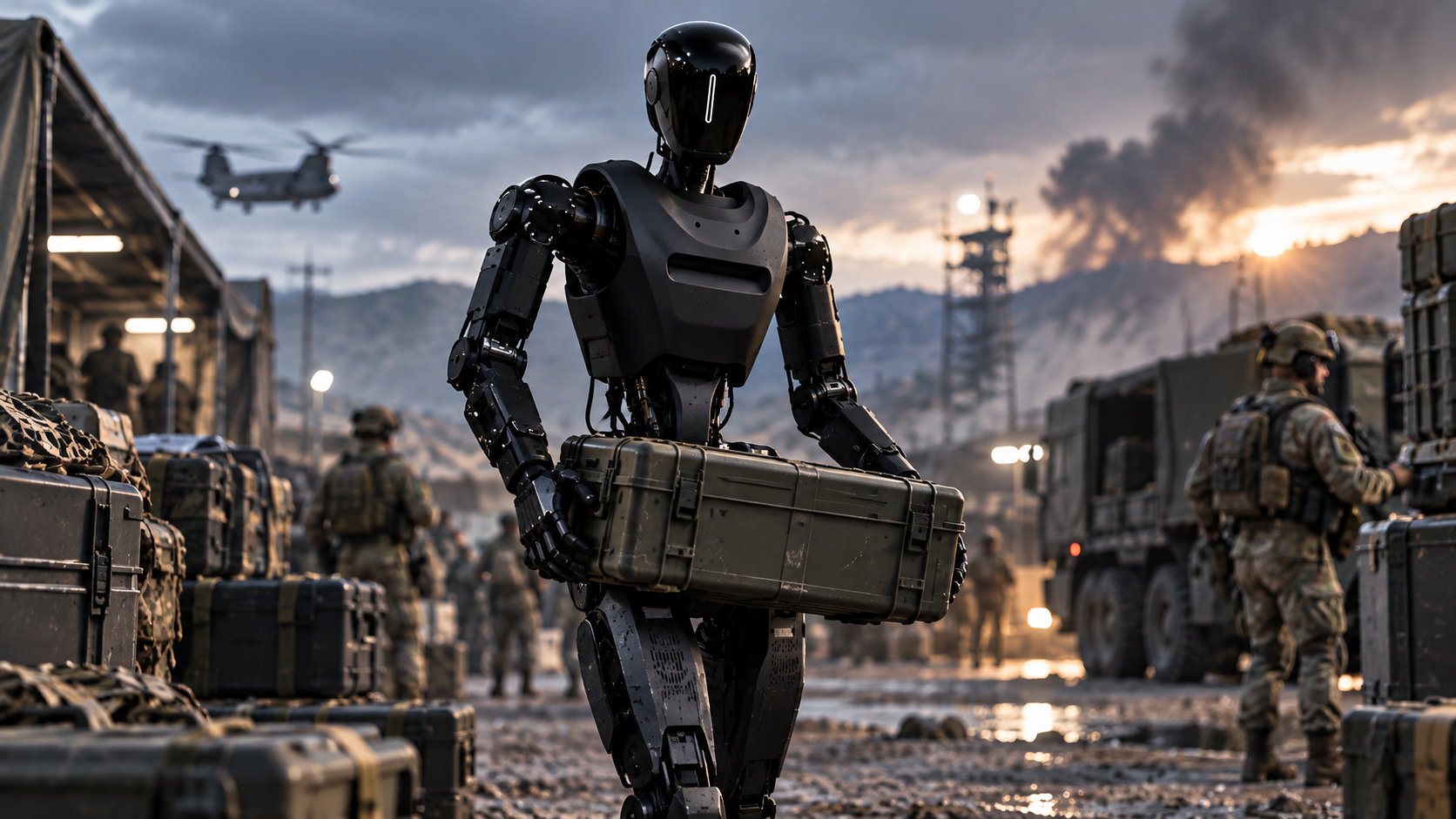
In February 2026, Foundation shipped two Phantom MK1 units to Ukraine, the first humanoid robots ever deployed to an active combat theater.
The shipment was confirmed by Ukrainian state media, the US government, and Foundation’s own co-founders. The robots were tested on logistics and reconnaissance work near the front line. While every other company in this series is racing to move totes in a warehouse, Foundation sent its robot to a war.
CEO Sankaet Pathak told TIME that, as with drones or machine guns, “you first have to get them into the hands of customers.” Ukraine is the customer. A live combat environment is the stress test.
Every hour those two robots operate on the front lines feeds the design of the Phantom MK2. Pathak says the MK2 will carry double the payload and deliver “superhuman” capabilities, and Foundation plans to send it to Ukraine later in 2026. Reports from the trials point to the MK1’s limits in payload, waterproofing, and battery life, so the field data is already shaping the next machine.
Who Builds the Phantom MK1, and Who Is Buying?

Foundation is a San Francisco startup founded in 2024 by CEO Sankaet Pathak and co-founder Mike LeBlanc, a former US Marine, and the US military is its highest-profile customer.
Foundation, registered as Foundation Future Industries, Inc., acquired Boardwalk Robotics in late 2024 and went from acquisition to first customer shipment in 13 months. The company holds $24 million in Pentagon research contracts spanning the US Army, Navy, and Air Force, covering inspection, logistics, and weapons-related tasks. Per TIME, the contracts include an SBIR Phase 3 award, which effectively makes Foundation an approved military vendor.
The Marine Corps is scheduled to test the Phantom for breaching operations, replacing the most dangerous moment of any infantry mission. Foundation is also in active discussions with the Department of Homeland Security about southern border patrol deployments. A DHS spokesperson told Fox News that the department currently has no agreements, pilots, or active prime contracts with Foundation.
The factory side is real too. The Phantom is being tested in factories and dockyards from Atlanta to Singapore, and Foundation told Reuters the MK1 helped build more than 24,000 cars in 2025.
Phantom MK1 Specs: Why It Runs on Cameras, Not LiDAR
The Phantom MK1 stands 5 feet 9 inches tall, weighs 176 pounds, carries up to 44 pounds, and sees the world through cameras instead of LiDAR.
| Specification | Phantom MK1 |
| Height | 5 feet 9 inches (175 cm) |
| Weight | 176 pounds (80 kg) |
| Payload | Up to 44 pounds (20 kg) |
| Degrees of freedom | 19 (upper body) |
| Top speed | About 3.7 mph (6 km/h) |
| Battery life | 4 hours |
| Perception | Camera-first, no LiDAR |
| Actuators | Proprietary cycloidal, up to 160 Nm (118 lb-ft) of torque |
| Price | About $100,000 per year, leased |
What makes the Phantom MK1 architecturally distinct is what it does not have. Foundation dropped LiDAR and runs a camera-first perception system powered by large language models, so an operator can give a natural language command and the robot translates it directly into physical motion. Fewer sensors and cables also mean simpler data and fewer failure points, according to the design team.
The cycloidal actuators stay back-drivable, with a back-driving torque under 1 Nm per Foundation, which lets a person move a joint by hand and makes the robot safer to work beside. The full spec card sits in the Phantom MK1 directory profile.
How Foundation Plans to Scale: Leases, MK2, and 50,000 Robots

Foundation leases the Phantom MK1 for about $100,000 per robot per year and targets 10,000 units by the end of 2026 and 50,000 units by the end of 2027.
Leasing lowers the upfront cost for customers. Foundation estimates each robot can save up to $166,000 a year in labor at near-full utilization, and Pathak’s own math puts 50,000 leased robots at about $5 billion in annual recurring revenue, per Forbes.
Those are aggressive numbers for a prototype-stage platform. But consider what Foundation has already done: built a humanoid in 13 months, shipped over 40 units, secured Pentagon contracts across three branches, and field-tested in a live war zone, all before most of its competitors have a commercial product. The next machine is already specified, too: Foundation picked AMD’s Ryzen AI Embedded X100 processor for the Phantom MK2.
What Happens When Defense Becomes a Customer?
Defense gives Foundation contracts, field data, and a customer willing to test early hardware, but it also brings rules and risks that factory humanoids never face.
The upside is clear. Approved-vendor status opens government budgets, and a war zone produces data no factory can. The rules are clear too. Current Pentagon protocols allow automated systems to engage only with a human’s approval, and Foundation says it will follow that principle with the Phantom.
Foundation has also taken a position most rivals avoid. Pathak has said that most US humanoid companies committed to non-weaponization, while Foundation believes its robots must master those tasks. For investors, that means a different buyer, a different risk profile, and a different ethical debate than any warehouse robot.
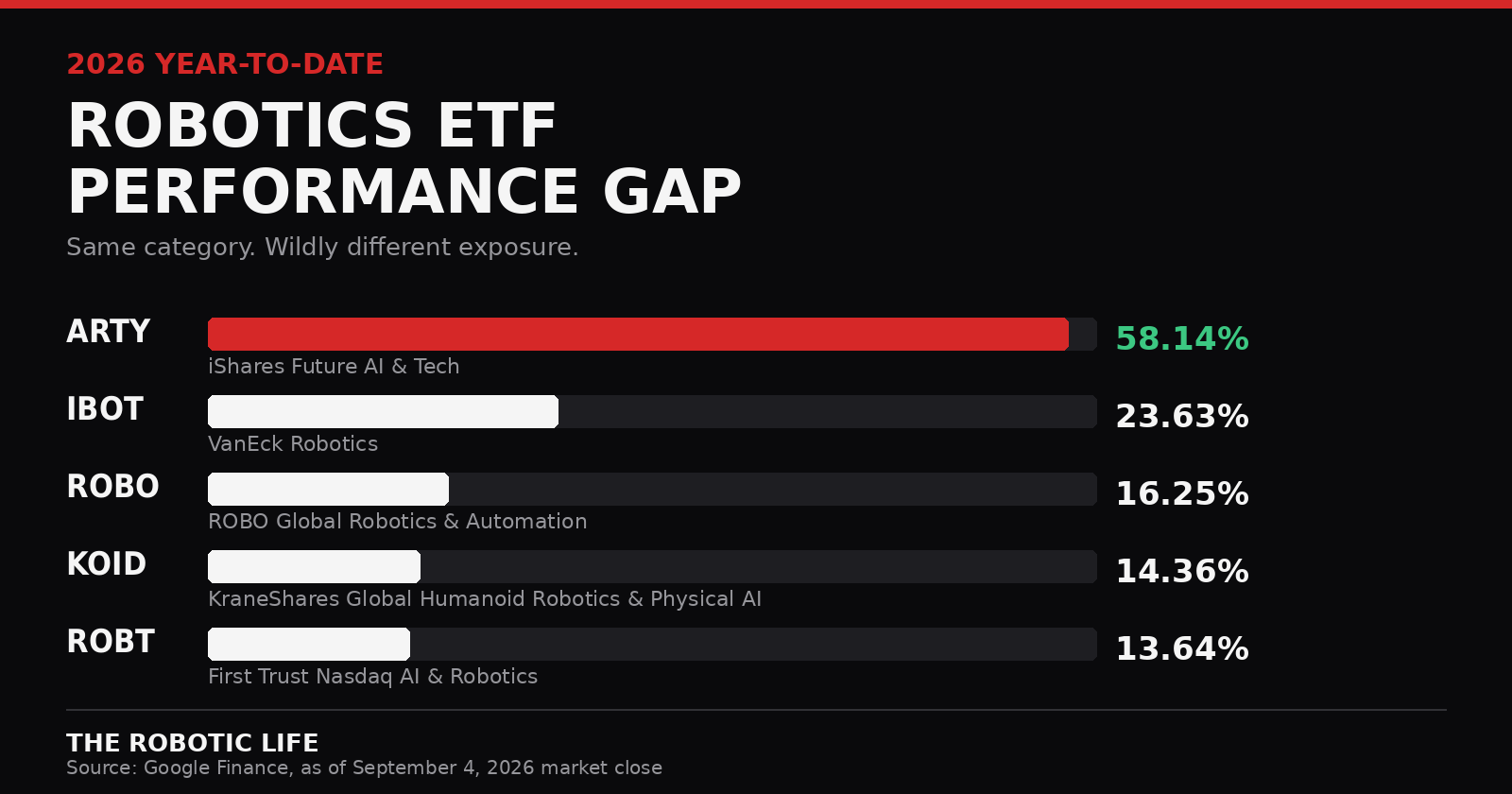
Foundation is private. Our humanoid robotics funding tracker estimates about $110 million raised and an implied valuation of $800 million to $1.2 billion. Public-market exposure to the category sits in our robotics ETF tracker, which covers 11 funds.
Factories buy productivity. Militaries buy capability. Foundation is betting it can sell both.
HMND 01, Phantom MK1, 4NE1: Where the Series Goes Next
The Phantom MK1 is the first robot in the Robot of the Week series built for defense as well as industry.
Last week covered the HMND 01 from Humanoid, Europe’s first pure-play humanoid robotics unicorn, backed by Bosch and Schaeffler with 34,000 preorders. This week the series came back to the United States and went to war.
Next week the series heads to Germany. NEURA Robotics announced a Series C of up to $1.4 billion backed by Amazon, NVIDIA, and Bosch, and its 4NE1 humanoid carries a payload nobody else in its class can touch. If the defense angle was a big story, wait until you see what Europe’s best-funded humanoid startup is building.
Phantom MK1 FAQ
What is the Phantom MK1?
The Phantom MK1 is a dual-use humanoid robot built by Foundation, a San Francisco startup founded in 2024. The robot stands 5 feet 9 inches, carries up to 44 pounds, and works in both industrial and defense settings.
Was the Phantom MK1 used in war?
Yes. Two Phantom MK1 units were shipped to Ukraine in February 2026, making it the first humanoid robot deployed to an active combat theater. The robots were tested on logistics and reconnaissance tasks.
How much does the Phantom MK1 cost?
Foundation leases the Phantom MK1 for about $100,000 per robot per year rather than selling it outright.
Does the Phantom MK1 use weapons?
In Ukraine, the Phantom MK1 handled logistics and reconnaissance. Foundation’s Pentagon research contracts cover weapons-related tasks, and the company says a human would authorize any use of force.
Can you invest in Foundation?
Not directly. Foundation is a private company. Investors looking for public exposure to humanoid robotics can compare funds in our robotics ETF tracker.
Key Takeaways: Foundation Phantom MK1
The Phantom MK1 became the first humanoid robot deployed to an active combat theater when two units reached Ukraine in February 2026. Foundation holds $24 million in Pentagon research contracts, leases the robot for about $100,000 a year, and runs it on cameras and cycloidal actuators instead of LiDAR.
The targets are aggressive: 10,000 units by the end of 2026 and 50,000 by the end of 2027. The question the Phantom raises is bigger than one company: what happens to the humanoid robot market when defense becomes a customer? The Robot of the Week series continues next week with NEURA’s 4NE1.
For full technical specifications, visit our Phantom MK1 Directory Profile.
Disclaimer
The Robotic Life provides informational coverage of humanoid robotics companies and industry developments. Nothing in this article constitutes investment advice. Readers considering financial decisions based on humanoid robotics companies should consult a qualified financial advisor.
Sources
- Foundation, company website
- Foundation, Phantom product page
- TIME, “Rise of the AI Soldiers” (March 9, 2026)
- Interesting Engineering, Phantom MK1 battlefield trials in Ukraine
- Militarnyi, Ukraine testing of the Phantom MK1
- eWeek, DHS statement on Foundation’s border proposal
- eWeek, Foundation’s 50,000-robot plan and labor savings estimate
- Forbes, Foundation’s production and lease plan (December 16, 2025)
- Robozaps, Phantom MK2 processor and MK1 lease pricing, citing Reuters
- Futura, Phantom MK1 camera-only perception
- Mike Kalil, Pathak’s statement on weaponization
- The Robot Report, NEURA Robotics Series C (June 10, 2026)
- The Robotic Life, Humanoid Robotics Funding Tracker: Foundation’s funding and implied valuation estimate
- The Robotic Life, Robotics ETF Tracker: the 11 tracked robotics ETFs