By Tim Culverhouse, Editorial Director, Robotics 24/7 | Guest contributor
Manipulation, perception, AI and safety advances bring humanoids closer to industrial applications
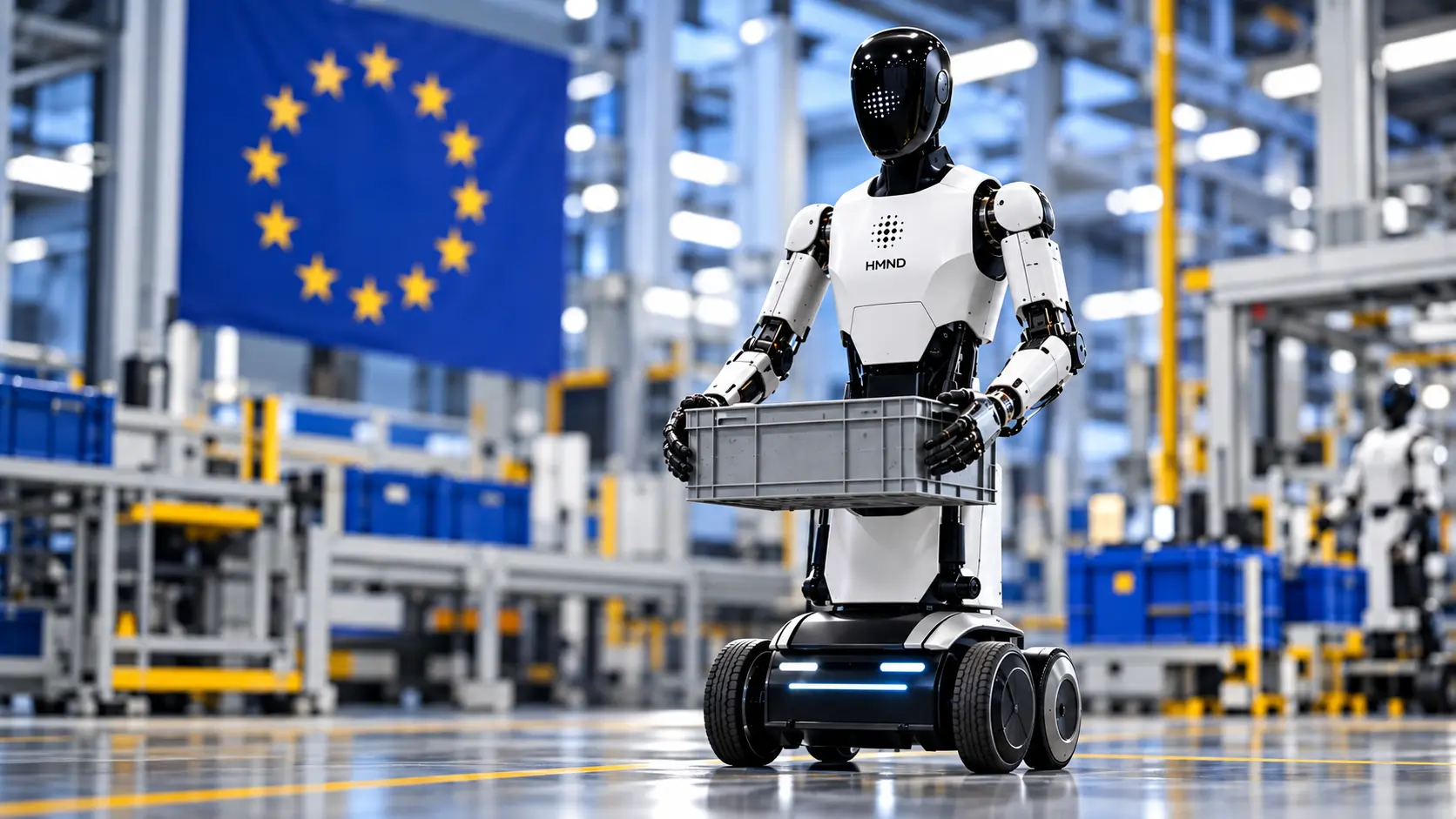
Humanoid robots made meaningful progress in 2026, as developers and technologists addressed challenges that have prevented these machines from widespread commercial adoption. Improvements in dexterity, perception, physical AI and human-robot interaction are moving humanoids beyond demos in YouTube videos, and toward practical industrial applications.
For investors, the key question is whether these advancements can translate into reliable performance, higher utilization and scalable deployments.
Robotics 24/7 examined the following humanoid robot developments from 2026 and their importance to this form factor’s future in broader industrial uses.
Boston Dynamics redesigns Atlas for industrial work
Boston Dynamics introduced a production-oriented version of its Atlas humanoid, pairing a redesigned platform with more capable hands and improvements intended to support autonomous operation. The redesigned Atlas features 56 degrees of freedom, a 7.5-foot reach and the ability to lift up to 110 lbs. Its hands provide 13 degrees of freedom, while the company added autonomous battery replacement capabilities, which are designed to reduce downtime.
The company said that the Atlas overhaul reflects a shift from a research platform toward a robot engineered for repeatable industrial work. The new Atlas features more dexterity, payload capacity and the ability to manage its own charging needs, which in turn could improve uptime and expand the range of tasks it can perform.
The next test will be demonstrating those capabilities reliably in production environments.
Google DeepMind advances embodied AI
Google DeepMind introduced its Gemini Robotics model family, applying vision-language-action capabilities and embodied reasoning to robotic systems.
The company said that the models are designed to help robots interpret their surroundings, understand instructions and perform tasks in changing environments. An on-device model runs robotic intelligence locally, rather than relying entirely on cloud connectivity.
Adding more adaptable AI could reduce the amount of task-specific programming and engineering that’s currently required to deploy humanoids. In turn, this would make it easier to move robots between applications and handle variations in real-world work.
However, performance across sustained, complex industrial tasks remains an important barrier to commercial readiness.
Agility Robotics increases Digit’s operating capabilities
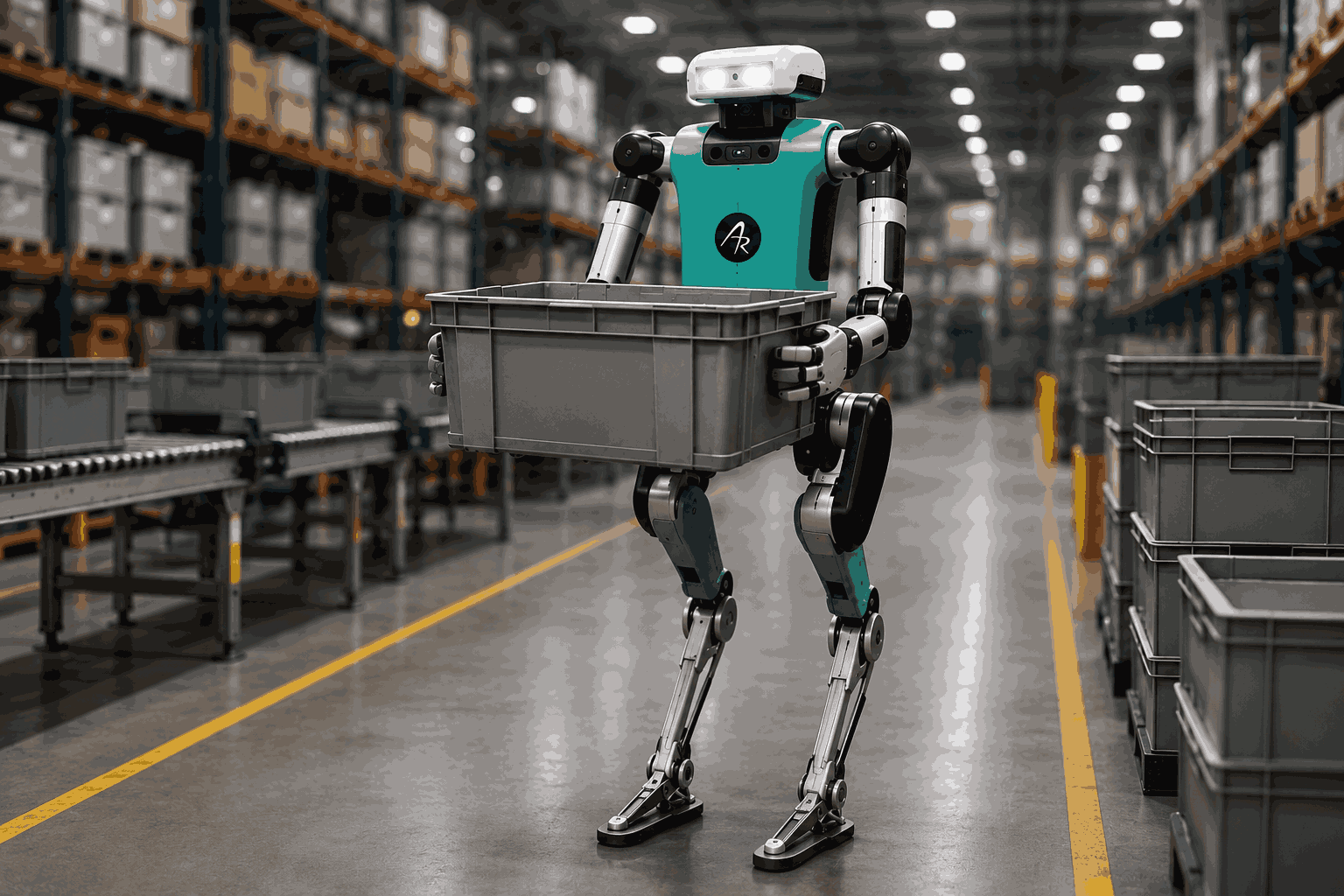
Agility Robotics unveiled Digit 5, its next-gen humanoid featuring improvements to payload capacity, runtime and application flexibility. The company said that Digit 5 is designed to handle repeated payloads of up to 50 lbs. — a reported 40% increase over its predecessor — and operate for approximately 90 minutes before a nine-minute charging cycle.
Interchangeable end effectors also allow the robot to be configured for different material-handling tasks.
Additionally, the company overhauled Digit 5’s safety architecture, designing it to reduce dependence on the protective barriers typically used in traditional robotic automation. Now, Agility said that Digit 5 can work in close proximity to people.
Payload, runtime and charging speed directly affect the economics of humanoid deployments. Measurable improvements in these areas could increase productive operating time and make the platform more attractive for logistics and manufacturing workflows. With the revamped safety architecture, Digit 5 could also enable different, or potentially new industrial applications, considering its closer proximity to its human “coworkers.”
Agility expects early access to Digit 5 to begin in the first half of 2027, with general availability later that year. Commercial success will depend on how consistently Digit can perform those tasks in customer facilities.
Generative Bionics gives GENE.01 a sensing skin
Generative Bionics unveiled GENE.01, a humanoid platform equipped with distributed tactile sensors across its body. The company said that its “smart skin” is designed to detect touch, force, temperature and proximity, allowing the robot to sense people and objects, and respond to physical contact.
Force sensing could also let operators teach tasks by physically demonstrating not just a movement, but the amount of pressure needed to complete it.
The company said that GENE.01 combines its sensing architecture with a physics-based approach to coordinating the robot’s body, mechanics and motion intelligence. Generative Bionics said that its digital twin is also available through established robotics software ecosystems, giving developers a way to simulate and build applications for the platform.
Whole-body sensing could help address a major obstacle to humanoid adoption: safe, predictable operation around people. Force feedback also has manipulation implications, where a robot must handle objects firmly enough to move them without damage. The technology is promising, but its value will ultimately depend on validation in industrial settings and the ability to turn the platform into repeatable, task-specific products.
XELA Robotics advances tactile sensing for manipulation
XELA Robotics continued the development of its uSkin tactile sensing technology, which the company said gives robotic hands and grippers the ability to detect three-dimensional contact forces. The sensors are designed to provide information about touch, pressure and slipping that conventional vision systems may not capture.
Reliable manipulation is still one of the hardest challenges for humanoids in 2026. Tactile feedback can help robots adjust their grip, handle objects more carefully and respond to unexpected contact. These capabilities will be particularly important in applications involving varied objects, delicate products or close interaction with people, echoing similar developments mentioned above.
Innodata builds infrastructure for humanoid training
Innodata established a motion-capture AI lab focused on collecting and developing data for humanoid robot training. The facility uses 3D optical motion capture to record human movement with reported submillimeter accuracy, supporting the creation of datasets that can be used to train robotic systems and evaluate their performance.
Humanoid developers, regardless of the application, need large quantities of high-quality motion data to teach robots how to perform physical tasks. Innodata believes that better capture and evaluation tools could accelerate skill development and help establish more consistent ways to measure performance. This is an important part of the supporting infrastructure required to scale humanoids, even if it doesn’t directly produce a deployable robot.
Commercial readiness and adoption remain the central tests
This collection of 2026 humanoid robot developments shows progress across several necessary technologies to make these robots commercially viable. More capable hands and tactile sensing could improve manipulation, while embodied AI and training data could increase humanoid adaptability across applications. Improvements in payload, runtime and safety could also strengthen the business case for industrial deployments.
But technical milestones aren’t the same as measurable success. Investors and prospective customers will need evidence of sustained performance, predictable maintenance costs, safe operation, ROI and measurable productivity gains.
The companies that can demonstrate those results in real facilities — not just controlled demonstrations — are poised to turn humanoid advances into viable businesses.
Editor’s note: For funding, valuation and deal data on the humanoid companies we track, see The Robotic Life’s Humanoid Robotics Funding Tracker.
About the author: Tim Culverhouse is the Editorial Director of Robotics 24/7 at Peerless Media, serving in this role since 2023. His mission is to provide valuable information and insights to robotics professionals and decision-makers, helping them solve business challenges.