The company that made robot vacuums mainstream…
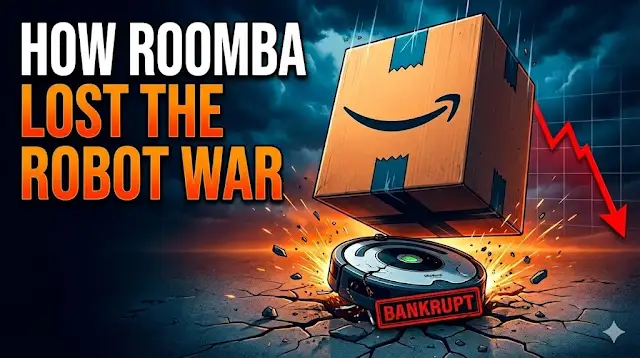
Just filed for bankruptcy.
And the reason why might surprise you.
Introduction
For years, iRobot wasn’t just a robotics company—it was robotics for millions of consumers.
The Roomba didn’t just succeed…
? It created an entire category.
But today, that same company is filing for Chapter 11 bankruptcy.
So what happened?
The Rise of a Robotics Pioneer
Founded in 1990 by MIT roboticists, iRobot started as a serious robotics company, not a consumer electronics brand.
Early innovations included:
- Military robots for bomb disposal
- Industrial robotics systems
But everything changed in 2002 with one product:
? The Roomba
The Roomba Era
The Roomba became:
- A household name
- A category creator
- A dominant market leader
At its peak, iRobot controlled:
? ~60% of the U.S. robot vacuum market
For many people:
? Roomba was robotics
The Problem With Being First
Success created a hidden challenge.
When you define a category…
? You’re expected to redefine it again.
And iRobot never quite did.
The Amazon Deal That Changed Everything
In 2022, Amazon announced plans to acquire iRobot for $1.7 billion.
The logic was clear:
- iRobot needed scale, cloud, and capital
- Amazon wanted home mapping data + smart home integration
On paper:
? It was a perfect match
Regulation vs Reality
Then regulators stepped in.
- European authorities raised competition concerns
- U.S. regulators questioned data usage
The deal stalled… then collapsed.
The Fallout ?
Without the acquisition:
- iRobot took on $200M in debt
- Laid off ~30% of staff
- Lost its CEO
- Stock collapsed
? From ~$60 → nearly $1
While iRobot Stalled… Others Accelerated
While iRobot was stuck in limbo, competitors moved fast.
Companies like:
? Ecovacs
Didn’t just improve robots…
They redefined the entire system.
The Omni Station Revolution
The biggest innovation wasn’t the robot itself.
It was the ecosystem.
Omni stations:
- Empty dustbins
- Wash mop pads
- Dry with hot air
- Refill water
? Fully autonomous maintenance
The Technology Gap
iRobot relied heavily on:
? Camera-based navigation
Meanwhile competitors used:
? LiDAR (laser mapping)
Difference?
- Cameras = guesswork
- LiDAR = precision
? In robotics, knowing beats guessing
The Final Blow
A 46% tariff increase on Vietnamese imports added:
? ~$23M in costs
Then came the knockout:
A manufacturing partner quietly bought $100M of iRobot’s debt.
Shortly after:
? Bankruptcy.
The Real Reason iRobot Failed
It wasn’t just regulation.
It wasn’t just competition.
? It was stagnation.
While competitors:
- Innovated faster
- Shipped better products
- Improved the full experience
iRobot:
- Played it safe
- Relied on brand
- Fell behind
The Bigger Lesson
This isn’t just about one company.
It’s about the pace of innovation.
In robotics (and tech):
? If you stop moving forward, you die.
Connect This to the Bigger Robotics Shift
We’re seeing this same pattern across robotics:
- Fast-moving startups
- Aggressive iteration
- Entire systems being reimagined
? Compare this to the 1X Neo humanoid robot, which is being positioned as a first-generation home robot
https://theroboticlife.com/robot/neo-by-1x-technologies/
? Or explore more robots in your humanoid directory
https://theroboticlife.com/humanoid-robots/
My Take (Lars’ Perspective)
iRobot didn’t lose because people stopped wanting robots.
They lost because:
- They stopped leading
- Others moved faster
- And the market didn’t wait
Final Thoughts
The Roomba isn’t just a product.
It’s a warning.
? In robotics, nostalgia doesn’t win.
Innovation does.
Call to Action
What do you think?
Was iRobot:
- A victim of regulation?
- Or outpaced by faster competitors like Ecovacs?
Drop your thoughts below—and follow The Robotic Life for more breakdowns on the future of robotics.