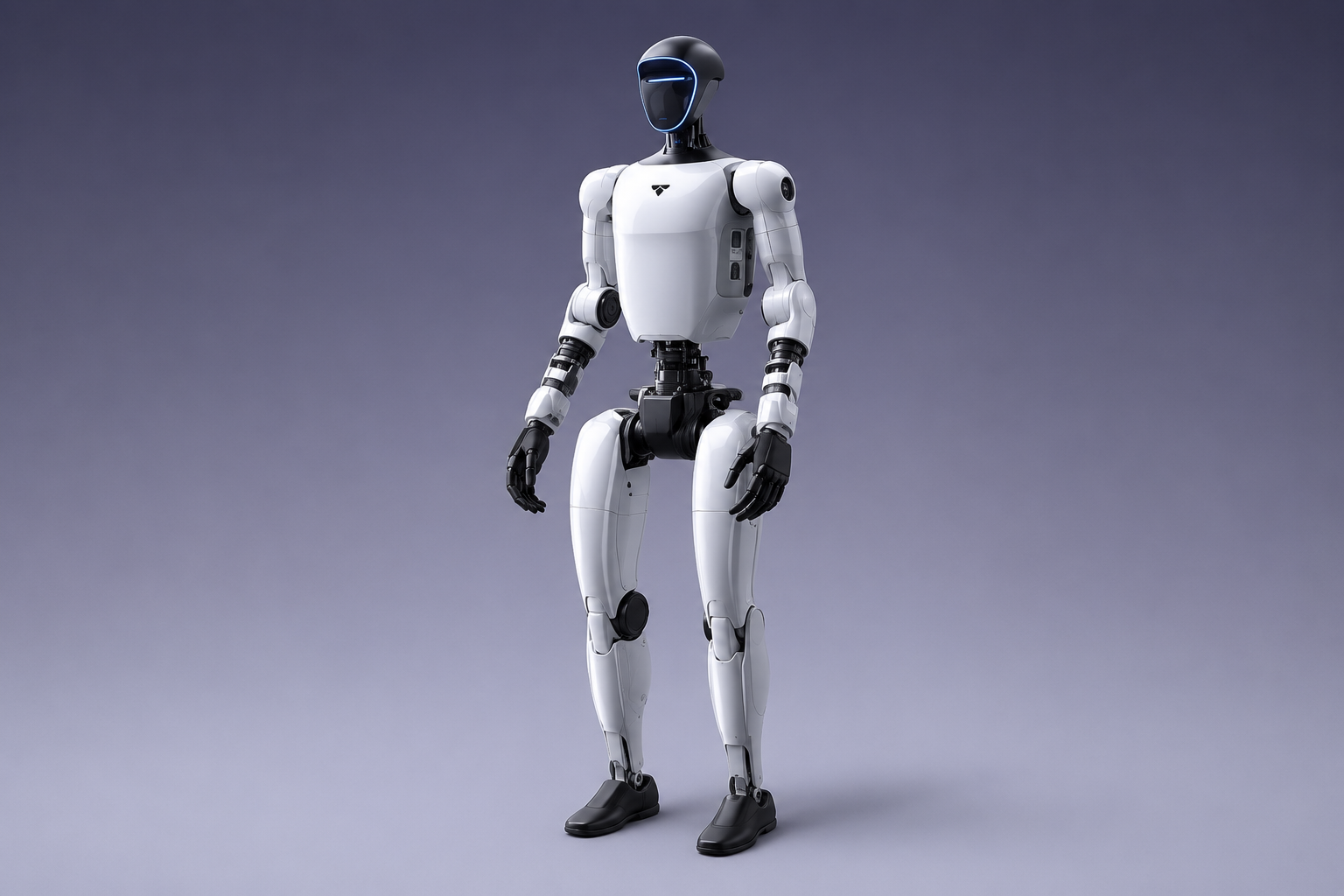
The Unitree G1 is the most accessible full-body humanoid robot on the market at a $16,000 starting price. Unitree shipped more than 5,500 humanoid robots in 2025, ranking first globally by volume. The company filed for an IPO on Shanghai’s STAR Market targeting a valuation near $7 billion.
The G1 stands 4 feet 4 inches, weighs 77 pounds, and offers up to 43 degrees of freedom depending on configuration. Research labs worldwide have adopted the G1 as reference hardware for AI and robotics development. This Robot of the Week breakdown covers the specifications, the price strategy, and the business behind the platform.
Watch:

Why the Unitree G1 Is This Week’s Robot of the Week
The Unitree G1 earns the Robot of the Week slot because the platform answers the question that decides industry speed: how fast humanoid robotics moves once the price of entry collapses.
Last week covered Neo from 1X Technologies, the home humanoid built for safety and soft interaction. Neo asked how much people will pay for a robot. The G1 flips the question to how cheap a real humanoid can get.
Unitree is based in Hangzhou, China. The company built its reputation on quadruped robots before applying the same manufacturing playbook to humanoids. That playbook is the reason the G1 matters. The playbook compresses hardware costs faster than any Western competitor has matched.
Unitree G1 Specifications
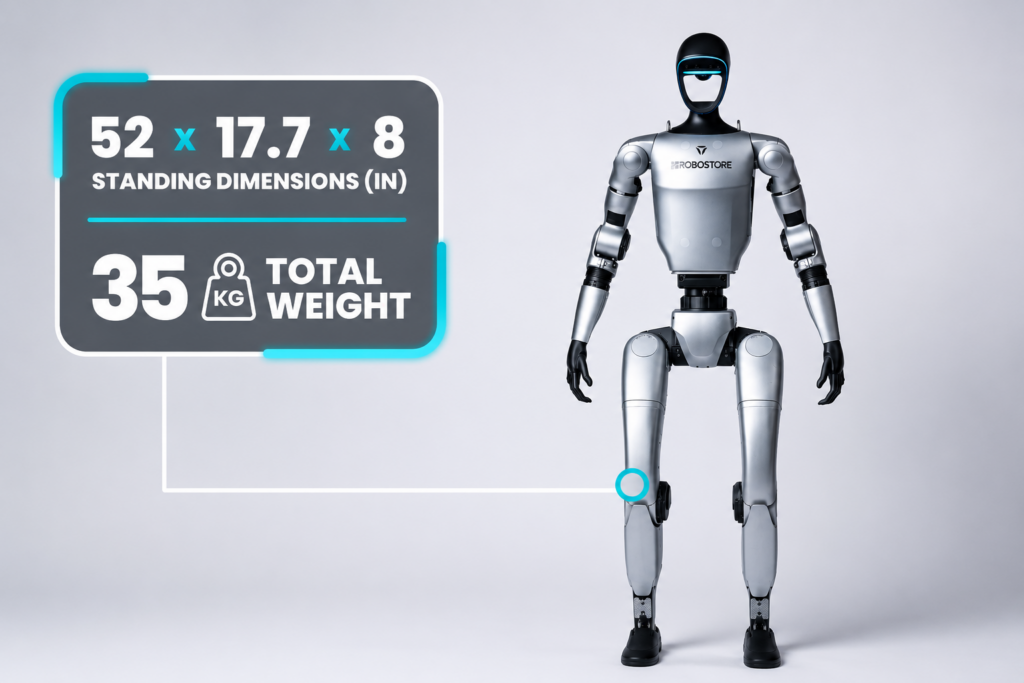
The Unitree G1 packs full humanoid capability into a compact frame at the lowest price point in the category.
| Specification | Unitree G1 |
| Height | 4 feet 4 inches (1.32 meters) |
| Weight | Approximately 77 pounds (35 kilograms) |
| Degrees of freedom | Up to 43, configuration dependent |
| Walking speed | Approximately 2 meters per second |
| Compute | NVIDIA Jetson Orin |
| Perception | 3D LiDAR plus depth cameras |
| Battery life | Approximately 2 hours of active use |
| Base price | Approximately $16,000 |
| EDU research versions | Higher, build dependent |
The battery life is modest at approximately two hours of active use. The price makes the trade-off acceptable for research and development workloads. The full hardware profile sits inside the Unitree G1 robot profile.
The Unitree G1 Price Strategy
The G1 starting price of $16,000 collapsed the entry cost for full-body humanoid robotics.
The base configuration starts around $16,000 per Robozaps pricing coverage. EDU research versions run higher depending on the build. The comparison set explains the shockwave. Boston Dynamics Atlas was never sold commercially. The 1X Neo carries a $20,000 price point for home buyers.
The G1 undercuts every full-size Western humanoid while shipping at volume today. Price collapse changes buyer math for universities, startups, and research groups. A lab that could never justify a six-figure research platform can justify a $16,000 one.
The pricing also pressures every competitor’s roadmap. Tesla targets $20,000 to $30,000 for Optimus Gen 3. Figure 03 sits in a $20,000 to $25,000 commercial range. Unitree set the category floor before either Western platform reached volume production.
The G1 as the Research Lab Standard
More G1 units operate in research labs than any other humanoid platform as of 2026, making the G1 the reference hardware for humanoid AI development.
University labs and startups are the buyers behind the shipment numbers. The G1 runs an NVIDIA Jetson Orin chip with 3D LiDAR and depth cameras, which matches the standard research stack. Developers build locomotion controllers, manipulation policies, and vision systems on the platform.
Reference hardware status compounds over time. Every published paper, open-source controller, and shared training pipeline built on the G1 makes the next lab more likely to buy one. The platform is becoming the default substrate for humanoid robotics research the way specific GPU generations became the default for AI training.
The research adoption also feeds Unitree a data advantage. Labs stress-test the hardware across thousands of experiments and publish the failure modes openly. Unitree reads that feedback loop for free while competitors pay for internal testing programs. The cheapest robot in the category is also the most field-tested one.
The Unitree Business Model and the STAR Market IPO
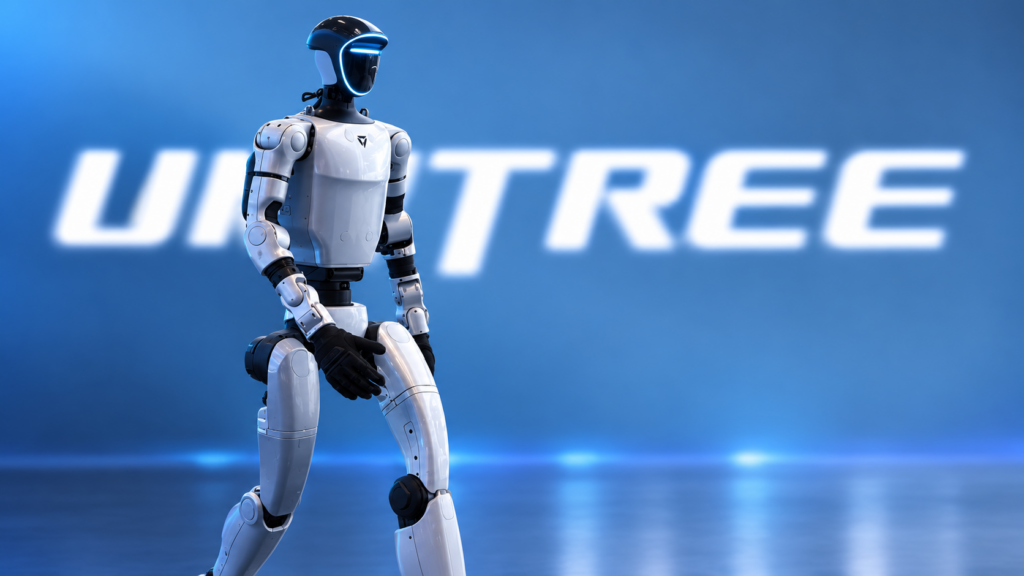
Unitree filed for an IPO on Shanghai’s STAR Market targeting a raise near $608 million at a valuation in the range of $7 billion.
The shipment numbers anchor the filing. Unitree shipped more than 5,500 humanoid robots in 2025, ranking first globally by volume. The company reported audited 2025 revenue of roughly $235 million with a 60 percent gross margin per the STAR Market filing. Most humanoid competitors burn venture capital with no revenue in sight. Unitree operates a profitable manufacturing business at scale.
The backer list reflects the momentum. Investors include Alibaba, Tencent, Ant Group, and Geely, alongside state-backed funds from Shanghai and Beijing. The company is not a research project. The company is a manufacturing operation with audited margins.
Unitree ranks second in the top humanoid robot startups of 2026 analysis. The ranking rests on this exact profile: shipping hardware, real revenue, and category-defining pricing.
Where the G1 Fits in the Robot of the Week Series
The Robot of the Week series tracks one question per platform, and the G1 answers the industry-speed question.
Atlas proved robots could move. Neo asked how people would receive a robot in the home. The full Neo breakdown sits in the 1X Neo Robot of the Week analysis. The G1 answers how fast the entire industry moves once the price of entry collapses.
Next week the series moves from the cheapest humanoid on the market to the one already earning a paycheck. Agility Robotics announced a SPAC merger with Churchill Capital Corp XI on June 24, 2026. The deal would make Agility the first publicly traded pure-play humanoid robotics company in the United States. The stock would trade as AGLT at a $2.5 billion valuation. The hardware behind that story sits in the Digit by Agility robot profile. The full business breakdown arrives in next week’s episode.
Frequently Asked Questions
How much does a Unitree G1 cost?
The Unitree G1 starts at approximately $16,000 for the base configuration per Robozaps pricing coverage. EDU research versions run higher depending on the build. The G1 is the most affordable full-size humanoid robot commercially available.
What are the Unitree G1 specifications?
The G1 stands 4 feet 4 inches, weighs approximately 77 pounds, and offers up to 43 degrees of freedom depending on configuration. The robot walks at approximately 2 meters per second, runs an NVIDIA Jetson Orin chip, and uses 3D LiDAR plus depth cameras for perception.
Is Unitree going public?
Yes. Unitree filed for an IPO on Shanghai’s STAR Market. The filing targets a raise near $608 million at a valuation in the range of $7 billion.
How many humanoid robots did Unitree ship in 2025?
Unitree shipped more than 5,500 humanoid robots in 2025, ranking first globally by shipment volume. The company reported audited 2025 revenue of roughly $235 million with a 60 percent gross margin per the STAR Market filing.
Is the Unitree G1 good for research?
Yes. More G1 units operate in research labs than any other humanoid platform as of 2026. The Jetson Orin compute, LiDAR perception stack, and $16,000 entry price make the G1 the reference hardware for humanoid AI development.
Key Takeaways: Unitree G1 Robot of the Week
The Unitree G1 is the most accessible full-body humanoid on the market at a $16,000 starting price. The platform stands 4 feet 4 inches and weighs 77 pounds. The configuration ceiling reaches 43 degrees of freedom with a 2 meter per second walk speed. Unitree shipped more than 5,500 humanoid robots in 2025, ranking first globally.
The company filed for a Shanghai STAR Market IPO targeting a $7 billion valuation. The filing reports roughly $235 million in audited 2025 revenue at a 60 percent gross margin. Research labs worldwide have made the G1 the reference hardware for humanoid AI development. The Robot of the Week series continues next week with Digit by Agility Robotics and the AGLT SPAC story.
For full technical specifications, target pricing, and hardware dimensions, visit our Unitree G1 Directory Profile
Disclaimer
The Robotic Life provides informational coverage of humanoid robotics companies and industry developments. Nothing in this article constitutes investment advice. Readers considering financial decisions based on humanoid robotics companies should consult a qualified financial advisor.