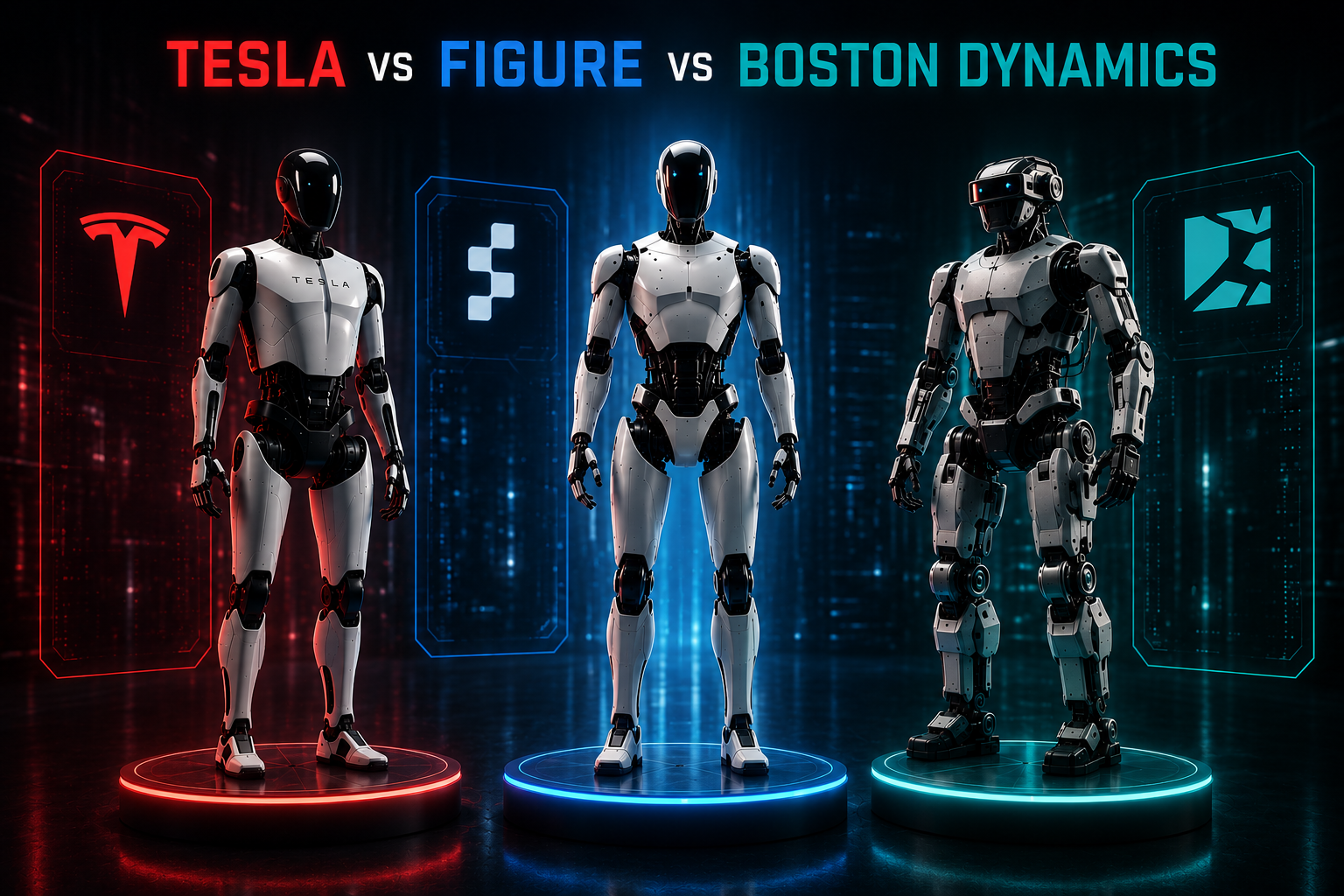
Tesla, Figure AI, and Boston Dynamics are running three different races inside the same humanoid robotics category. Tesla Optimus Gen 3 targets factory-scale labor at a $20,000 to $30,000 price point. Figure 03 targets the home with the Helix 02 vision-language-action model and a $39 billion company valuation. Boston Dynamics Atlas carries 30 years of locomotion research into Hyundai’s manufacturing network.
The winner depends on which race matters: production scale, home adoption, or engineering depth. The Robotic Life tracks all three companies plus 28 more inside the humanoid robot directory. This comparison breaks down the strategy, hardware, AI, and deployment status of each contender.
Watch:

Tesla Optimus Gen 3 vs Figure 03 vs Boston Dynamics Atlas: Comparison Table
The table below compares the three humanoid contenders on ownership, strategy, pricing, AI approach, and 2026 deployment status.
| Attribute | Tesla Optimus Gen 3 | Figure 03 | Boston Dynamics Atlas |
| Company HQ | Austin, Texas | San Jose, California | Waltham, Massachusetts |
| Ownership | Public (Tesla, Inc.) | Private, $39B valuation | Hyundai-owned since 2021 |
| Target market | Factory and industrial labor | Home and commercial | Industrial manufacturing |
| Target price | $20,000 to $30,000 | $20,000 to $25,000 commercial | Not publicly priced |
| AI approach | Vision-only FSD neural networks, Cortex 2.0 | Helix 02 VLA model, onboard execution | Reinforcement learning, Toyota Research Institute partnership |
| Production plan | Fremont, late July or August 2026 start | BotQ, 12,000 units per year target | Hyundai Metaplant deployment path |
| 2026 signature move | $25B CapEx, Fremont conversion | 200-hour livestream, BMW deployment | Electric Atlas commercial pivot |
Each contender leads a different column. The sections below explain why.
Tesla Optimus Gen 3: The Factory-Scale Play
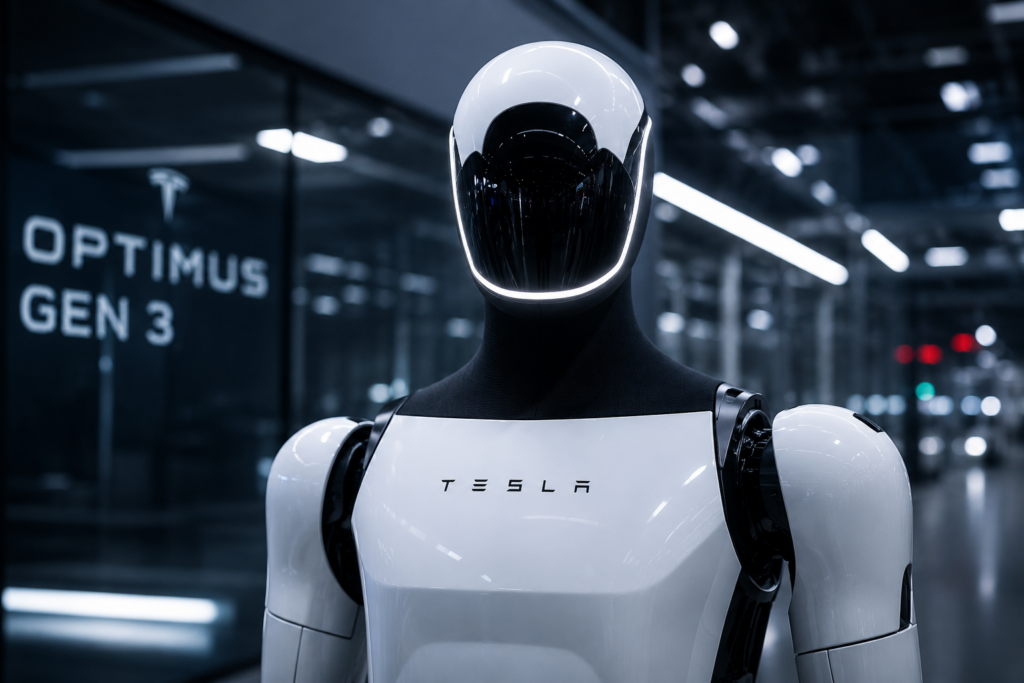
Tesla Optimus Gen 3 is the scale bet, built to convert the Full Self-Driving ecosystem into an affordable industrial labor force.
Tesla is headquartered in Austin and ports its vision-only FSD neural networks directly into the Optimus bipedal form. The strategy treats the robot as an extension of an existing AI stack rather than a standalone project. The Cortex 2.0 training infrastructure trains both product lines on shared compute.
The published hardware profile lists a frame of approximately 5 feet 8 inches and 125 pounds per Tesla specifications. The locked Gen 3 capability set includes 22 degrees of freedom in the hands and 50 actuators. Walking speed reaches 8 mph across a 3,000-plus task range. The target price sits between $20,000 and $30,000.
The production math defines the bet. Optimus Gen 3 production begins at Fremont in late July or August 2026 per Electrek. The Fremont capacity target is 1 million units per year. Initial 2026 output is estimated at approximately 25,000 units per Nomura research. Tesla committed $25 billion in 2026 CapEx per Bloomberg. The full strategy sits inside the Optimus Gen 3 Robot of the Week breakdown.
Figure 03: The Home-First Play
Figure 03 is the home-first bet, pairing consumer-safe hardware with the Helix 02 vision-language-action model.
Figure AI announced Figure 03 on October 9, 2025 with hardware designed for domestic environments. The robot ships with tactile fingertip sensors detecting forces as light as 3 grams plus embedded palm cameras. A soft textile exterior, wireless inductive charging, and speech-to-speech audio complete the consumer-safe package.
The AI layer is the differentiator. Helix 02, announced January 27, 2026, controls the full body through a single neural network running onboard the robot. The model learns tasks by observation rather than explicit programming.
The 2026 receipts are specific. Figure completed a 200-hour warehouse livestream in May 2026 with five robots sorting 249,560 packages and zero reported failures per Interesting Engineering. BMW Group announced Figure 03 deployment at Spartanburg in June 2026 per The Robot Report. The company holds a $39 billion valuation on more than $1.9 billion raised per Robozaps. The BotQ facility targets 12,000 units per year. The hardware detail sits inside the Figure 03 robot profile.
Boston Dynamics Atlas: The Engineering Heritage Play
Boston Dynamics Atlas is the engineering-depth bet, carrying three decades of locomotion research into Hyundai’s manufacturing network.
Hyundai acquired Boston Dynamics in 2021 in a deal valuing the company at $1.1 billion. The acquisition gave the deepest locomotion research organization in robotics a direct path into automotive manufacturing.
The Atlas program pivoted from research to commerce in April 2024. Boston Dynamics retired the hydraulic Atlas and announced the all-electric Atlas built for real work. The company partnered with Toyota Research Institute in October 2024 to develop large behavior models for the platform.
The deployment path runs through Hyundai. Boston Dynamics has announced Atlas deployment plans at Hyundai’s Georgia Metaplant. Commercial revenue from Spot and Stretch funds the humanoid program while Atlas matures. The platform history sits inside the Atlas by Boston Dynamics robot profile.
The Brain Versus Body Race Behind the Comparison
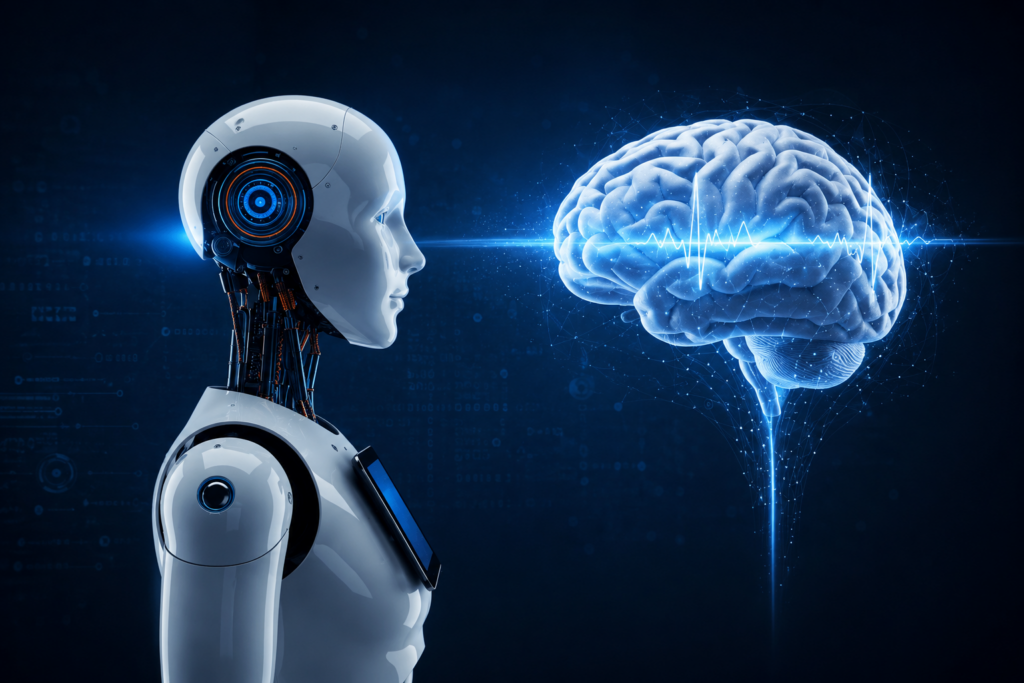
The humanoid robot race splits into a brain race and a body race, and no single company leads both.
The brain race covers the AI layer. Tesla ports FSD neural networks. Figure runs Helix 02 onboard. Boston Dynamics builds large behavior models with Toyota Research Institute. American companies lead this layer today.
The body race covers hardware economics. Actuator supply chains, hand assemblies, and battery integration decide unit costs. Shenzhen-based manufacturing is compressing body costs fastest, with Unitree shipping the G1 at $16,000 per Robozaps. Chinese hardware scaling sets the price floor for the entire category.
The winning platform needs both layers. A brilliant brain inside an expensive body loses on unit economics. A cheap body without a general-purpose brain stays a demonstration piece. The valuation split between AI-layer companies and hardware-layer companies reflects this divide.
Who Is Winning the Humanoid Robot Race
No single company is winning the humanoid robot race, because the three contenders are running three different races.
Tesla leads the scale race. A 1 million unit per year capacity target and $25 billion in CapEx have no category equal.
Figure leads the home race and the capital race. A $39 billion valuation, a working home-focused robot, and a BMW deployment give Figure the strongest 2026 receipts.
Boston Dynamics leads the engineering race. Thirty years of locomotion research and Hyundai’s manufacturing distribution keep Atlas the most technically respected platform.
The next 24 months decide the standings. Fremont production ramps, BotQ output, and Metaplant deployment convert strategy into shipped units. The Robotic Life tracks all three programs weekly as the results arrive.
Frequently Asked Questions
Who is winning the humanoid robot race in 2026?
No single company leads every category. Tesla leads production scale with a 1 million unit per year Fremont capacity target. Figure AI leads home robotics and private capital at a $39 billion valuation. Boston Dynamics leads locomotion engineering with Hyundai manufacturing distribution.
What is the difference between Tesla Optimus and Figure 03?
Tesla Optimus Gen 3 targets factory labor using vision-only FSD neural networks at a $20,000 to $30,000 price point. Figure 03 targets home environments using the Helix 02 vision-language-action model with tactile sensors and a soft textile exterior.
Is Boston Dynamics Atlas commercially available?
Atlas is not commercially available for purchase today. Boston Dynamics announced deployment plans at Hyundai’s Georgia Metaplant. The electric Atlas, announced April 2024, is the commercial-path successor to the retired hydraulic research platform.
Which humanoid robot is the cheapest in 2026?
The Unitree G1 at approximately $16,000 is the most affordable full-size humanoid per Robozaps. Tesla targets $20,000 to $30,000 for Optimus Gen 3. Figure 03 sits in a $20,000 to $25,000 commercial range.
Which company leads humanoid robot AI?
Figure AI holds the strongest verified AI results with Helix 02 running fully onboard through the 200-hour warehouse livestream. Tesla holds the largest training data advantage through the FSD vehicle fleet and Cortex 2.0 infrastructure.
Key Takeaways: Tesla vs Figure vs Boston Dynamics
Tesla, Figure AI, and Boston Dynamics lead three different races inside humanoid robotics. Tesla Optimus Gen 3 wins on scale ambition with a 1 million unit Fremont capacity target and $25 billion in 2026 CapEx. Figure 03 wins on home positioning and capital with a $39 billion valuation, the Helix 02 model, and a BMW deployment.
Boston Dynamics Atlas wins on engineering heritage with 30 years of locomotion research and a Hyundai Metaplant path. The brain race favors American AI stacks while Shenzhen hardware scaling sets the category price floor. The next 24 months of production ramps decide the real standings. The Robotic Life tracks all 31 humanoid robotics companies as the results arrive.
Disclaimer
The Robotic Life provides informational coverage of humanoid robotics companies and industry developments. Nothing in this article constitutes investment advice. Readers considering financial decisions based on humanoid robotics companies should consult a qualified financial advisor.
Sources
- Tesla Q1 2026 Update and Bloomberg (April 22, 2026), $25B CapEx guidance
- Electrek (April 2026), Optimus Gen 3 Fremont production timeline
- Nomura research, Optimus 2026 output projection
- Figure AI blog, Figure 03 announcement (October 9, 2025), Helix 02 announcement (January 27, 2026)
- Interesting Engineering (May 25, 2026), Figure 200-hour livestream completion
- The Robot Report (June 29, 2026), BMW Group Figure 03 deployment
- Robozaps (June 10, 2026), humanoid pricing and valuations
- Hyundai acquisition of Boston Dynamics (2021), $1.1 billion transaction record
- Boston Dynamics, electric Atlas announcement (April 2024)
- Boston Dynamics and Toyota Research Institute partnership (October 2024)