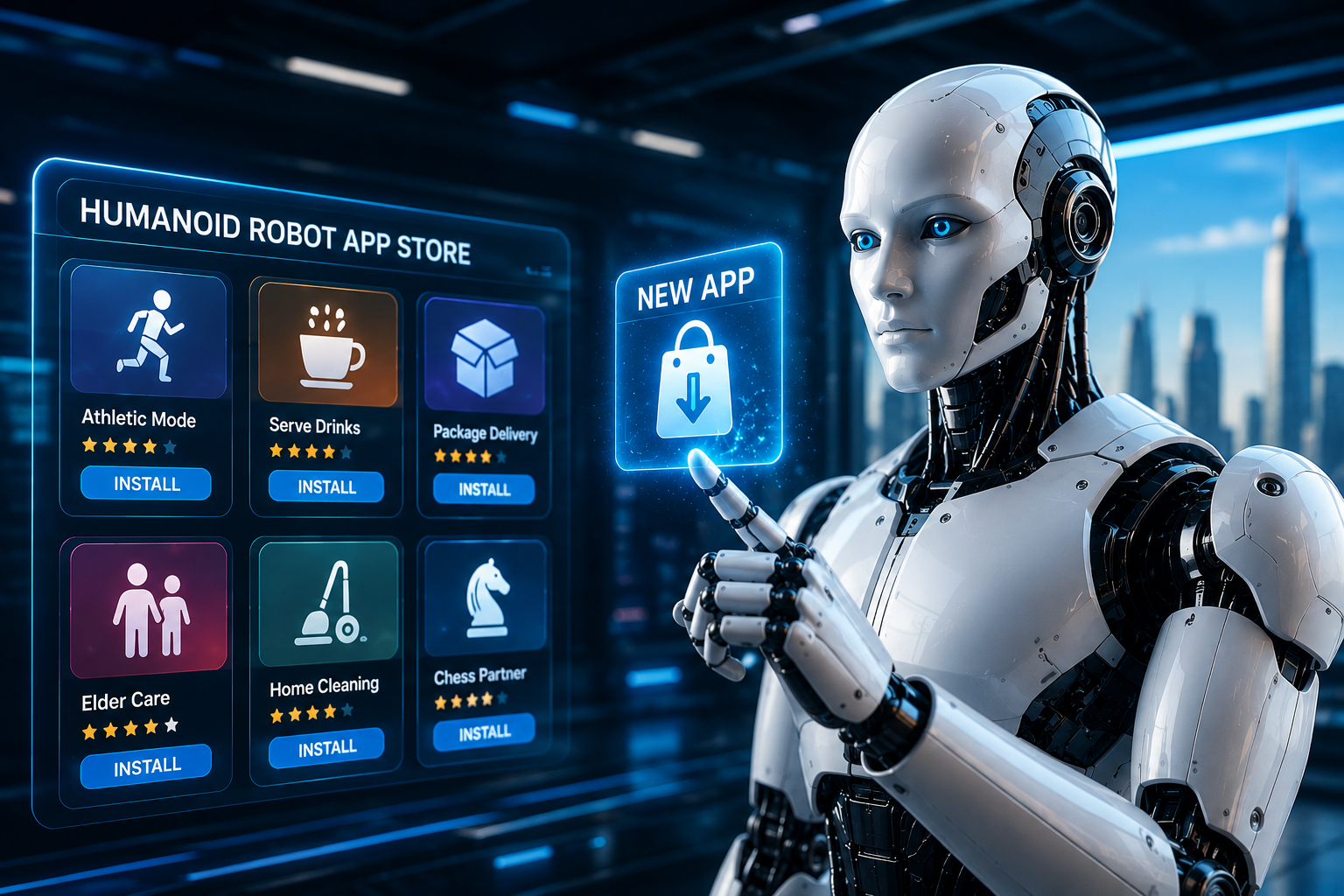
Humanoid robot app stores let owners download new robot capabilities instead of programming them. Unitree launched a public beta of a motion app store for the G1 humanoid. OpenMind launched a universal cross-platform robot app marketplace. The model follows the iPhone App Store playbook: manufacturers build the platform, developers build the capabilities.
The Robotic Life launched the Humanoid Robot App Store Directory to track every marketplace in this emerging category. Robot apps remove the programming barrier that keeps humanoid robots out of consumer homes. The software ecosystem, not the hardware, will decide which humanoid platforms win.
Watch:

The Unitree G1 Owner Interview That Changed My Read on Consumer Robots
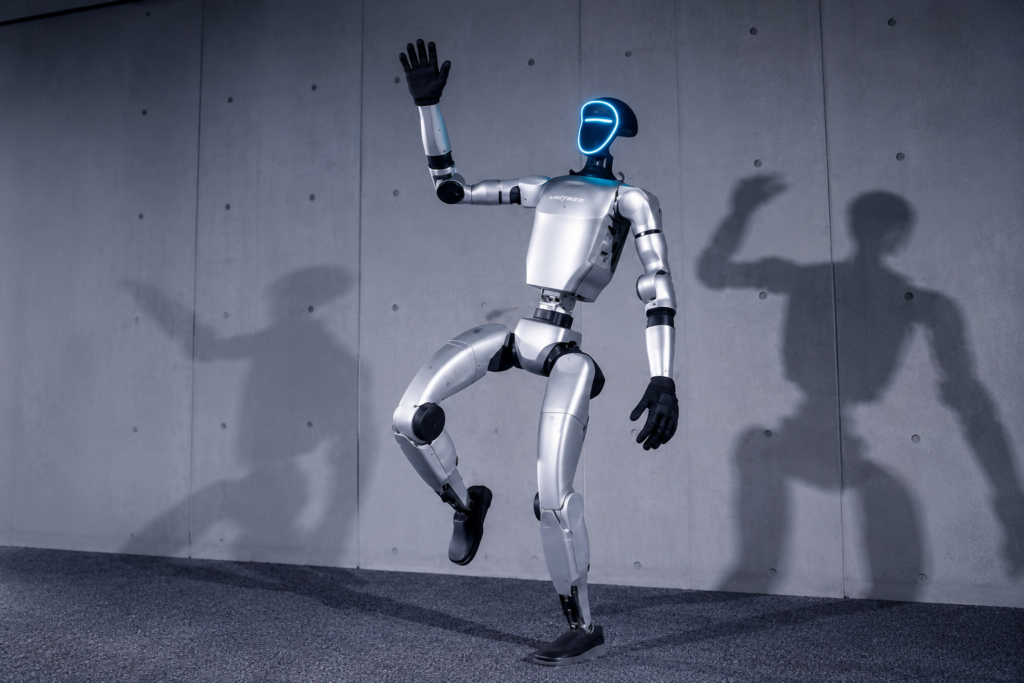
A Unitree G1 owner told me his robot performed three or four basic functions out of the box, and the answer reframed my entire view of consumer humanoid robotics.
A few months ago I interviewed a G1 owner for The Robotic Life. The owner is a software developer by trade. The G1 performed three or four basic functions on arrival. Beyond those functions the robot sat idle.
The owner solved the problem the way a developer solves problems. He programmed new capabilities himself over several months. The robot became useful because the owner wrote the software.
Most robot buyers cannot do that. Most people are not programmers. Most people do not write Python. The programming barrier keeps humanoid robots inside a small enthusiast market.
I left that interview believing consumer humanoid robots were years away. The Unitree G1 robot profile covers the hardware behind that conversation. The hardware was never the problem. The software access was.
What a Humanoid Robot App Store Is
A humanoid robot app store is a marketplace where robot owners download new capabilities instead of programming them.
The model works in three steps. A developer builds an application once. The developer uploads the application to the marketplace. Every compatible robot owner installs the capability with a single download.
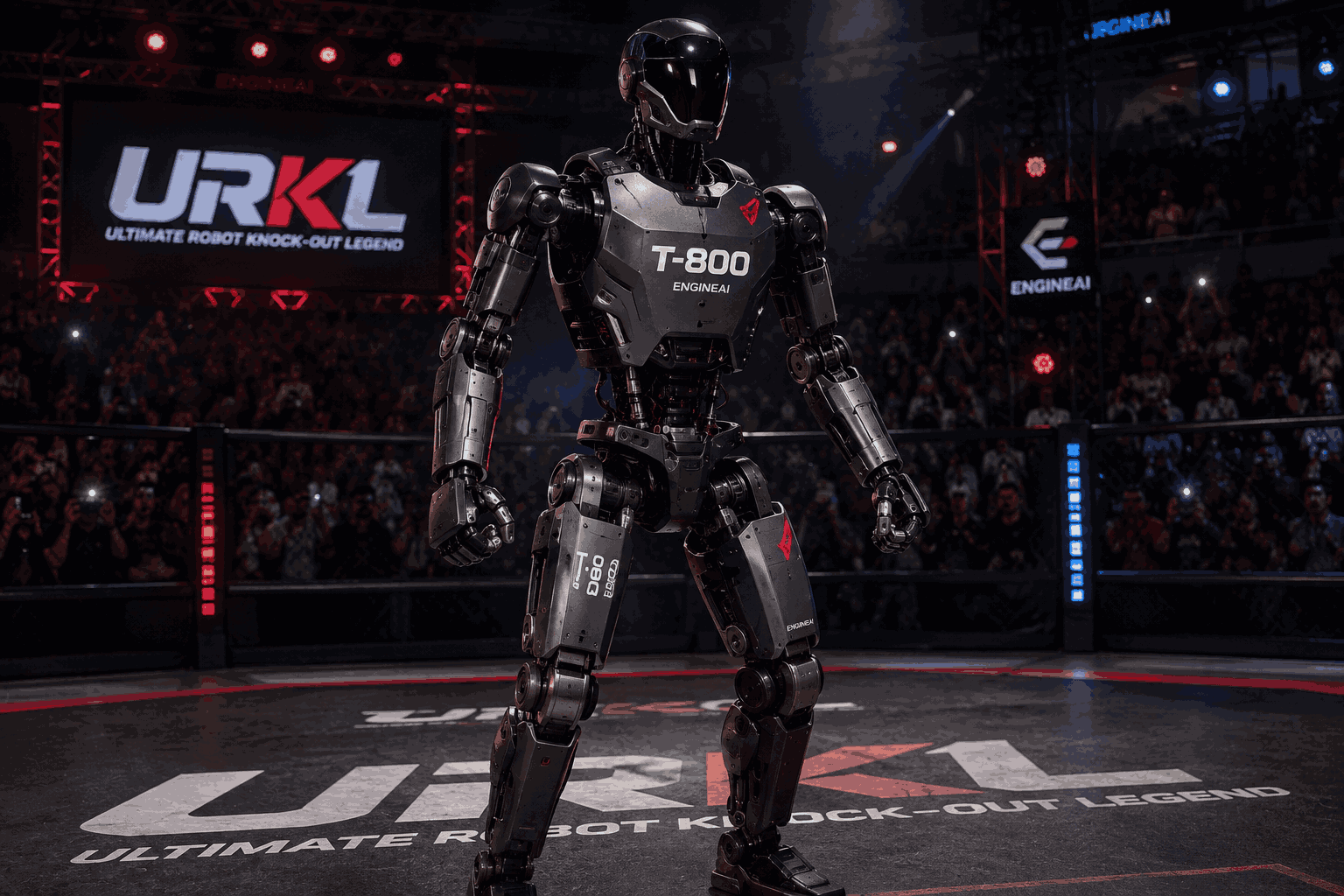
The capability range covers real household needs. An owner who needs elder-care support downloads the elder-care package. An owner who wants laundry folded downloads the laundry skill. A parent who wants a chess partner for the kids downloads the chess application. A hobbyist who wants to enter a robot fighting league downloads the combat package.
The robot stops being a fixed-feature product. The robot becomes a platform that gains value with every installed capability. Thousands of developers can build different capabilities at the same time. Innovation stops being limited by what the manufacturer builds internally.
The iPhone App Store Parallel for Humanoid Robots
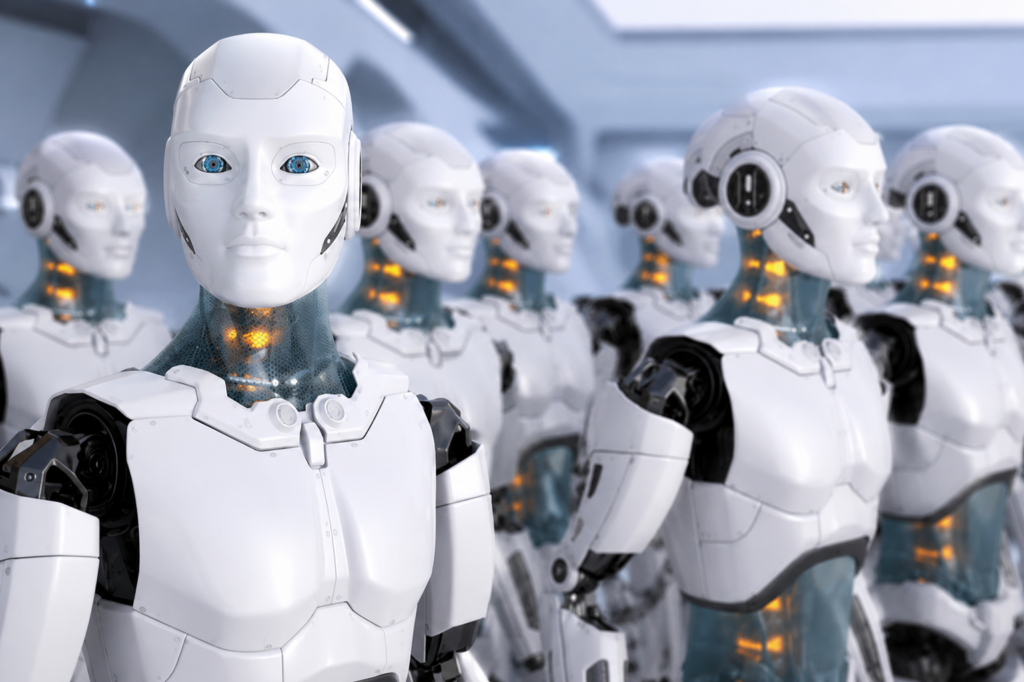
Humanoid robotics is approaching the same platform inflection point the iPhone reached when the App Store launched in 2008.
Apple launched the iPhone in 2007 as impressive hardware. The App Store arrived in July 2008 with approximately 500 applications. Apple did not build Uber. Apple did not build Instagram. Apple built the platform and developers built the applications.
Uber launched in 2010 on infrastructure Apple never planned. Instagram launched in October 2010 the same way. The iPhone stopped being a phone and became an ecosystem.
The hardware question dominates humanoid robotics today. Tesla, Figure AI, and Unitree compete on actuators, hands, and walking speed. Most humanoid platforms will eventually reach comparable hardware quality the way smartphones did. The software ecosystem around each platform will decide the winners.
The Robot App Stores Live Right Now
Two humanoid robot app marketplaces are already operating: the Unitree motion app store beta and the OpenMind universal robot app store.
Unitree launched a public beta of a dedicated motion app store for the G1 platform per the company’s announcement. The store lets G1 owners download and install new physical skills directly onto the robot. The manufacturer controls the platform and the hardware together.
OpenMind launched a universal robot app store built as a cross-platform marketplace per the company’s launch. OpenMind builds no hardware. Developers write an application once and deploy the application across robots from different manufacturers. The OpenMind model separates the software layer from the hardware layer completely.
Both marketplaces are small today. The original App Store opened with approximately 500 applications and reshaped the global economy within a decade. Early marketplace size predicts nothing about ecosystem trajectory. The Robotic Life tracks every marketplace launch in this category as the space develops.
The Humanoid Price Curve Meets the Software Curve
Humanoid hardware pricing is falling toward consumer territory at the same moment robot app stores are removing the software barrier.
The Unitree G1 starts at $16,000 per Robozaps pricing coverage. The Unitree R1 entered the market under $6,000 at launch. The humanoid price curve is bending toward consumer territory year over year.
Affordable hardware alone cannot carry a consumer product. A $6,000 robot with three capabilities is a demonstration piece. A $6,000 robot with access to hundreds of downloadable capabilities is a consumer product. The capability depth changes the purchase math entirely.
The two curves are converging now. Hardware prices fall while downloadable capability counts rise. The intersection point is where consumer adoption starts. The humanoid robot directory tracks every platform approaching this price-capability threshold.
The Killer App Question for Humanoid Robots
The application that gives millions of people a reason to bring a robot home will define this industry. That application probably does not exist yet.
Nobody bought the first iPhone for Uber. Uber did not exist in 2007. Nobody bought the first iPhone for Instagram. Instagram did not exist either. The transformative applications arrived after the platform matured.
The same sequence is coming for humanoid robots. The category assumes the killer app will be laundry folding or dishwasher unloading. The killer app may be a home tutor. The killer app may be a new robot sports league. The killer app may be something a developer is building in a garage right now.
The better question for this category is not who builds the best robot. The better question is who creates the killer app for humanoid robots. History answers hardware races with software winners.
What Robot App Stores Mean for the Humanoid Category
Hardware commoditizes and software ecosystems differentiate, and the pattern that decided smartphones is forming in humanoid robotics now.
The pattern held for personal computers. The pattern held for smartphones. The pattern is forming for humanoid robots. Marketplace launches deserve the same investor attention as funding rounds.
The hardware race remains important. The top humanoid robot startups of 2026 analysis covers that race in depth. The app store layer sits on top of the hardware race and may capture more long-term value than the hardware itself. The Robotic Life tracks both layers so investors and consumers can follow the full picture.
Frequently Asked Questions
What is a humanoid robot app store?
A humanoid robot app store is a marketplace where robot owners download new capabilities instead of programming them. Developers build applications once and distribute them to every compatible robot. Unitree and OpenMind operate the first marketplaces in this category.
Can you download apps for a humanoid robot today?
Yes. Unitree runs a public beta of a motion app store that installs new physical skills on the G1 humanoid. OpenMind runs a universal cross-platform robot app store that deploys applications across robots from different manufacturers.
What robot app stores exist right now?
The Unitree motion app store (G1 platform, public beta) and the OpenMind universal robot app store are live today. The Humanoid Robot App Store Directory at The Robotic Life tracks every marketplace in this category as new stores launch.
Will we have humanoid robots in homes by 2027?
Entry-level humanoid pricing already sits under $6,000 with the Unitree R1. Home adoption depends on downloadable capability depth, not hardware availability. Robot app store growth through 2026 and 2027 is the strongest leading indicator to watch.
What is the killer app for humanoid robots?
The killer app for humanoid robots probably does not exist yet. Uber and Instagram did not exist when the iPhone launched in 2007. The transformative robot application will likely arrive after the app store platforms mature.
Key Takeaways: Humanoid Robot App Stores in 2027
Humanoid robot app stores remove the programming barrier that keeps humanoid robots inside the enthusiast market. Unitree runs a public beta motion app store for the G1. OpenMind runs a universal cross-platform robot marketplace. The model follows the iPhone App Store sequence: platform first, developer ecosystem second, adoption acceleration third.
The Unitree G1 starts at $16,000 and the R1 entered under $6,000, so the hardware price curve is meeting the software capability curve. The killer app for humanoid robots probably does not exist yet, the same way Uber did not exist when the iPhone launched. The Robotic Life tracks this category through the Humanoid Robot App Store Directory, the humanoid directory, and the funding tracker.
Disclaimer
The Robotic Life provides informational coverage of humanoid robotics companies and industry developments. Nothing in this article constitutes investment advice. Readers considering financial decisions based on humanoid robotics companies should consult a qualified financial advisor.
Sources
- Unitree, motion app store public beta announcement for the G1 platform
- OpenMind, universal robot app store launch
- Robozaps (June 10, 2026), Unitree G1 pricing
- Unitree R1 launch coverage (2025), entry-level humanoid pricing
- Apple, App Store launch (July 2008), historical platform record
- The Robotic Life, Humanoid Robot App Store Directory launch
- Lars Talbert, first-hand interview with a Unitree G1 owner